





What's Happening?
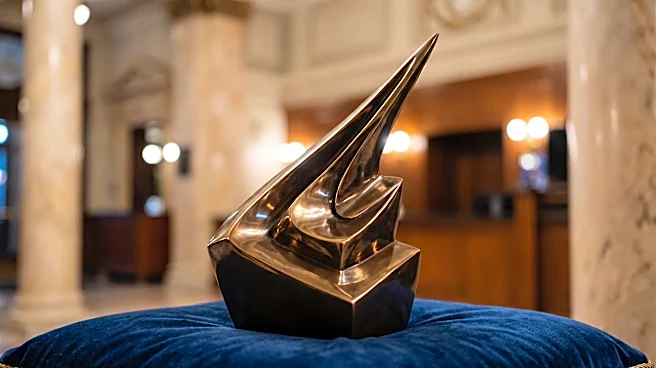
David Mamet, a prominent American playwright and filmmaker, is set to receive a Kennedy Center Honor. This recognition comes at a time when Mamet's public image has significantly shifted from his earlier embrace by liberal circles. Once celebrated for
his contributions to American theater and film, including works like 'Glengarry Glen Ross' and 'The Verdict,' Mamet has increasingly become known for his conservative views and role in the culture war. His recent activities include writing for publications like The Free Press, making controversial statements on Fox News, and expressing praise for President Trump. This evolution in his public persona, coupled with a series of less successful theatrical and film projects, has led to a decline in his esteem among his former liberal admirers.
Why It's Important?
The decision to honor David Mamet at the Kennedy Center, particularly given his recent political alignment and controversial statements, highlights a broader tension within American arts and culture. It underscores the ongoing debate about whether artistic merit should be separated from an artist's political views or personal conduct. For the Kennedy Center, an institution often seen as a bipartisan shrine to art, this honor could be interpreted in various ways, potentially sparking discussions about its criteria for recognition and its role in a politically polarized environment. Mamet's trajectory from a critically acclaimed dramatist to a conservative pundit reflects a significant cultural shift where artists are increasingly scrutinized for their political stances, impacting their professional and public reception.
What's Next?
The upcoming Kennedy Center Honors ceremony, where Mamet will be recognized, is likely to draw attention and potentially spark further public discourse regarding the intersection of art and politics. The event itself, which typically includes career retrospectives, may offer an opportunity to re-evaluate Mamet's body of work in light of his current public image. Reactions from various stakeholders, including other artists, cultural critics, and political commentators, are anticipated. This event could also prompt broader conversations about the future of cultural institutions in navigating an increasingly divided society and how they choose to celebrate individuals whose public personas have become contentious.
Beyond the Headlines
David Mamet's journey from a celebrated playwright to a figure often associated with conservative punditry raises profound questions about artistic integrity, intellectual evolution, and the impact of political alignment on an artist's legacy. It prompts reflection on whether an artist's earlier works, often interpreted through a liberal lens, can be re-evaluated or understood differently when the artist's later views diverge sharply. This situation also highlights the 'culture war's' pervasive influence, where even artistic achievements become subject to political interpretation and debate. The ethical dimension involves the responsibility of public figures to their audience and the potential for their personal beliefs to overshadow their professional contributions. This development could signify a long-term shift in how American society perceives and honors its cultural icons, particularly those who become vocal participants in political discourse.