




What's Happening?
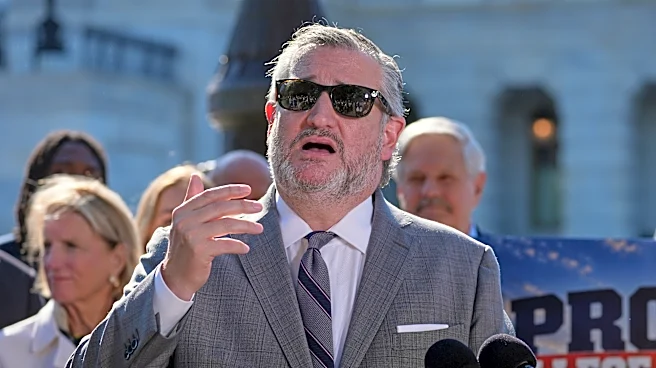
Representative Yvette Clarke, a Democrat from New York and Chairperson of the Congressional Black Caucus, has publicly stated her opposition to the Protect College Sports Act. This bipartisan bill, led by Senator Ted Cruz (R-Texas) and Senator Maria Cantwell
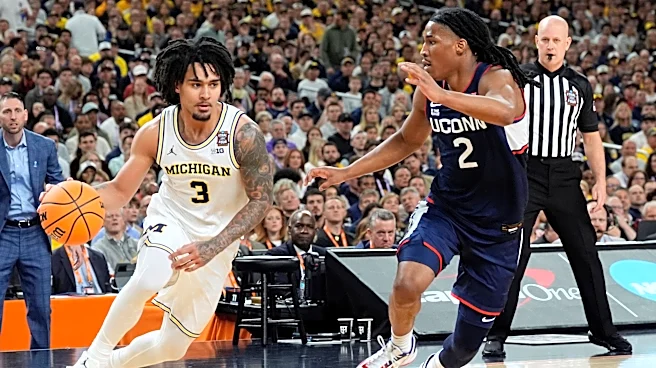
(D-Wash.), aims to establish federal regulations for college sports, particularly concerning Name, Image, and Likeness (NIL) rules. The Congressional Black Caucus, under Clarke's leadership, announced it would not support the legislation. Their opposition stems from the belief that the bill would undermine the bargaining power of predominantly Black athletes. The Caucus also linked their stance to broader concerns about attacks on Black political representation across the country, referencing a recent Supreme Court decision on the Voting Rights Act. Senator Chris Murphy (D-Conn.), an opponent of the bill, echoed these sentiments, suggesting that the 'chaos' in college sports is a result of athletes gaining bargaining power, which some coaches and sports industry executives dislike. The bill proposes restrictions on the transfer portal, a uniform five-year eligibility framework, and federal standards for NIL rules, among other measures.
Why It's Important?
The opposition from Representative Clarke and the Congressional Black Caucus highlights a significant debate regarding equity and representation within collegiate athletics. The argument that the Protect College Sports Act could disproportionately affect Black athletes' ability to negotiate their NIL deals and transfer opportunities raises critical questions about fairness in a system where a large percentage of revenue-generating athletes are Black. This legislative push comes at a time when college sports are undergoing a major transformation due to NIL, which has allowed student-athletes to benefit financially for the first time. The bill's potential to create exemptions from antitrust laws for colleges further complicates the landscape, potentially limiting athletes' economic freedoms. The broader context of attacks on Black political representation, as cited by the Congressional Black Caucus, underscores how legislative actions in one sector can be viewed through the lens of wider social and racial justice issues, impacting public policy and the rights of specific demographic groups.
What's Next?
The Protect College Sports Act has advanced to the next phase in the Senate, opening the possibility for a full Senate vote. However, the strong opposition from Representative Clarke and the Congressional Black Caucus indicates that the bill faces significant hurdles, particularly in the House. The debate is likely to continue, with proponents arguing for the need to bring order to the 'Wild West' of college sports and opponents emphasizing the potential negative impact on student-athletes' rights and bargaining power. Stakeholders, including athletic institutions, student-athlete advocacy groups, and civil rights organizations, will likely intensify their lobbying efforts. The bill's future will depend on its ability to garner sufficient bipartisan support while addressing the concerns raised by groups like the Congressional Black Caucus regarding equity and representation. Further discussions and potential amendments may be necessary to reconcile these differing viewpoints.
Beyond the Headlines
The controversy surrounding the Protect College Sports Act extends beyond immediate legislative outcomes, touching upon deeper ethical and societal implications. The argument that the bill could diminish the economic agency of predominantly Black athletes highlights the historical power imbalances within collegiate sports. For decades, colleges and athletic conferences have generated billions in revenue, while student-athletes, many of whom are Black, were prohibited from profiting from their own name, image, and likeness. The advent of NIL was seen by many as a step towards rectifying this imbalance. If the proposed legislation is perceived as rolling back these gains, it could exacerbate existing racial disparities and fuel broader discussions about systemic inequalities in American institutions. This situation also underscores the complex interplay between sports, politics, and civil rights, demonstrating how legislative decisions in seemingly apolitical arenas can have profound social and economic consequences for specific communities.