




What's Happening?
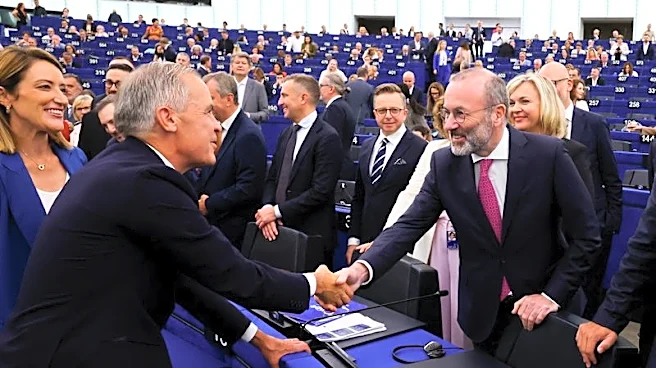
Governor Janet Mills of Maine recently conducted bilateral meetings with top Montenegrin leaders, including President Jakov Milatović and Foreign Minister Ervin Ibrahimović, to commemorate two decades of partnership between Maine and Montenegro. The discussions
centered on enhancing cooperation across several critical sectors: defense, cybersecurity, artificial intelligence, and the economy. Governor Mills underscored the enduring nature of this relationship and the mutual commitment to its future growth. Foreign Minister Ibrahimović highlighted the United States' role as Montenegro's primary strategic partner and ally, emphasizing its significance for peace, stability, and security in the Western Balkans. The visit also coincided with the 20th anniversary of the Maine-Montenegro National Guard Partnership, with Major General Diane Dunn accompanying Governor Mills. This partnership, established in 2006, links U.S. states and territories with other nations to collaborate on military, security, and disaster response capabilities.
Why It's Important?
This diplomatic engagement is significant for several reasons. For Maine, it solidifies a long-standing international relationship that has fostered collaboration in defense and security, particularly through the National Guard State Partnership Program. This program allows for the exchange of expertise and joint training, enhancing the readiness and capabilities of both Maine's National Guard and Montenegro's armed forces. For Montenegro, the continued partnership with Maine, and by extension the United States, is crucial for its national security and its aspirations for European integration. The focus on cybersecurity and artificial intelligence reflects the evolving nature of global threats and the need for advanced technological cooperation. Economically, strengthening ties with the U.S. and attracting American investors, especially in strategic areas like the Adriatic-Ionian Corridor, could significantly boost Montenegro's development and stability. The emphasis on reforms and the recognition of Montenegro's progress by Governor Mills further underscore the value of this alliance in promoting democratic values and regional stability.
What's Next?
The discussions indicate a clear intention to further develop the partnership between Maine and Montenegro. Future steps will likely involve concrete projects and increased investments, particularly in the economic sector, with a focus on attracting American companies to Montenegro's development initiatives. Continued collaboration in cybersecurity and artificial intelligence is anticipated, potentially leading to more training and exchange programs. The ongoing participation of the Maine National Guard in exercises like 'Common Challenge 2026' suggests a sustained commitment to defense cooperation and interoperability. Both parties expressed a willingness to expand their partnership, indicating that the next phase will involve translating these discussions into tangible outcomes that benefit both Maine and Montenegro, reinforcing their shared interests and long-term relationship. The visit sets the stage for continued dialogue and implementation of cooperative strategies across various sectors.
Beyond the Headlines
The enduring partnership between Maine and Montenegro, spanning two decades, highlights a broader U.S. foreign policy strategy of fostering stability and security through state-level engagements. This 'soft diplomacy' approach, exemplified by the National Guard State Partnership Program, allows for deeper, more nuanced relationships than traditional federal-level interactions. It builds trust and mutual understanding at a grassroots level, which can be particularly effective in regions like the Western Balkans, where geopolitical dynamics are complex. The focus on emerging technologies like cybersecurity and AI also points to the evolving nature of international cooperation, moving beyond traditional military aid to encompass critical infrastructure protection and technological advancement. This partnership serves as a model for how sub-national entities can contribute significantly to national foreign policy objectives, promoting shared values and interests in a rapidly changing global landscape.