





What's Happening?
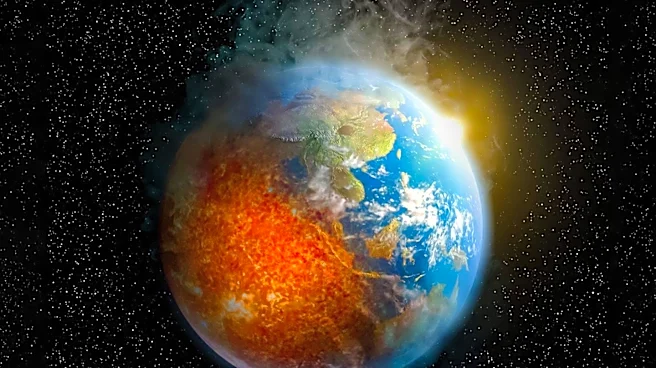
A new study by planetary scientists Jacob Haqq-Misra and Eric Wolf suggests that Earth's vegetative biosphere could survive for up to 1.87 billion years. The research, published in the Journal of Geophysical Research: Atmospheres, used simulations to predict
the future of Earth's climate and its impact on plant life. The study found that as the Sun brightens by 20%, it could eventually lead to conditions that either bake or choke plant life out of existence. However, the researchers note that this timeline does not account for potential evolutionary adaptations or technological advancements that could extend plant survival.
Why It's Important?
The study provides a long-term perspective on the resilience of Earth's biosphere, highlighting the potential longevity of plant life despite future climatic changes. This research is significant for understanding the limits of life on Earth and the factors that could influence its persistence. It also raises questions about the role of human intervention and technological innovation in extending the viability of Earth's ecosystems. The findings could inform future strategies for preserving biodiversity and managing the impacts of climate change.
What's Next?
The study opens up possibilities for further research into the potential for plant evolution and technological solutions to extend the lifespan of Earth's biosphere. Scientists may explore geoengineering methods or other speculative ideas to mitigate the effects of increased solar radiation. Additionally, the study encourages consideration of how life could adapt to changing environmental conditions, potentially leading to new insights into the future of life on Earth and beyond.