





What's Happening?
The U.S. Court of Appeals for the Ninth Circuit has issued a ruling that permits the U.S. Department of Homeland Security (DHS) to continue deploying chemical munitions near Gray’s Landing, an affordable housing complex in Portland, Oregon. This community
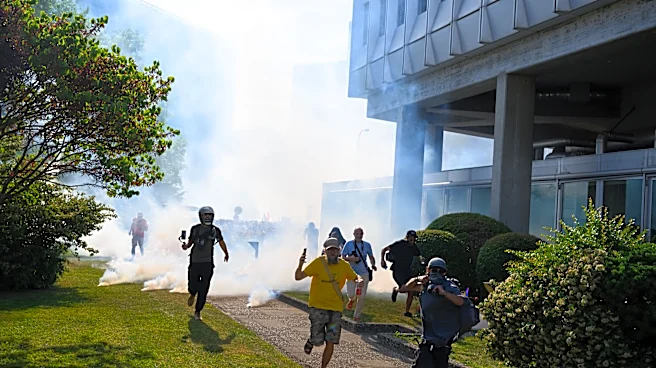
is situated adjacent to an Immigration and Customs Enforcement (ICE) facility. For several months, federal agents had used chemical agents, including tear gas, smoke grenades, and pepper balls, in the vicinity of the housing complex during protests at the nearby ICE facility. Residents of Gray’s Landing, which includes children, seniors, veterans, and individuals with disabilities, reported that these chemical agents infiltrated their apartments, hallways, and common areas. The reported health impacts included respiratory distress, chest pain, and panic attacks, with some residents resorting to sealing their homes and wearing gas masks indoors to mitigate exposure. Earlier in the legal proceedings, a district court had issued an injunction to prevent federal officers from deploying such crowd-control agents in a manner that would likely affect the 209-unit residential community. However, that injunction was subsequently paused by a Ninth Circuit motions panel as the appeal progressed. The plaintiffs in the case, REACH Community Development and Gray’s Landing residents, were represented by several legal organizations, including Democracy Forward and Protect Democracy.
Why It's Important?
This ruling by the Ninth Circuit Court carries significant implications for the safety and well-being of residents living near federal facilities where crowd control measures are employed. The decision effectively prioritizes the operational discretion of federal agencies, such as DHS, over the direct health and safety concerns of nearby civilian populations. For the residents of Gray’s Landing, this means a continued potential for exposure to chemical munitions, which they have reported causes severe health issues and disrupts their ability to safely inhabit their homes. The case highlights a broader tension between public safety during protests and the protection of vulnerable communities from the collateral effects of law enforcement actions. It also underscores the challenges faced by advocacy groups and residents in seeking legal redress against federal agencies for actions taken during civil unrest. The outcome could set a precedent for similar situations across the country, potentially limiting the ability of communities to secure protections against the impact of chemical agents used in their vicinity, thereby shifting the burden of these impacts onto residents.
What's Next?
Following the Ninth Circuit's decision, the immediate consequence is that DHS can resume or continue the use of chemical munitions near Gray's Landing without the previous district court injunction. The plaintiffs, including REACH Community Development and the affected residents, have expressed deep disappointment with the ruling. Their joint statement indicates a continued commitment to supporting residents and advocating for their safety, suggesting that while this legal avenue has been exhausted at this level, their broader advocacy efforts will persist. This could involve exploring other legal strategies, engaging in public awareness campaigns, or seeking legislative remedies to protect communities from similar exposures. The decision may also prompt other civil rights and environmental justice organizations to monitor federal agency actions more closely, particularly in urban areas adjacent to federal facilities. Furthermore, the ruling could influence future policy discussions regarding the permissible scope and proximity of chemical agent deployment in residential areas during protests, potentially leading to calls for clearer guidelines or restrictions from civil society groups and local governments.
Beyond the Headlines
The Ninth Circuit's decision extends beyond the immediate impact on Gray's Landing residents, touching upon fundamental questions of environmental justice, civil liberties, and the accountability of federal agencies. The repeated exposure of residents, including vulnerable populations, to chemical munitions raises ethical concerns about disproportionate impacts on communities living near sites of protest or federal operations. It highlights a systemic issue where the consequences of crowd control tactics can spill over into residential areas, affecting individuals who are not directly involved in demonstrations. Legally, the ruling underscores the broad authority granted to federal agencies in certain operational contexts, even when those operations impinge on the health and safety of civilians. Culturally, it may deepen public distrust in governmental institutions, particularly among communities that feel their well-being is secondary to law enforcement objectives. This case could also serve as a catalyst for broader discussions on the long-term health effects of chemical munitions exposure and the need for more robust regulatory frameworks to protect residential areas from such hazards, potentially influencing future public health policies and urban planning considerations near sensitive federal facilities.