




What's Happening?
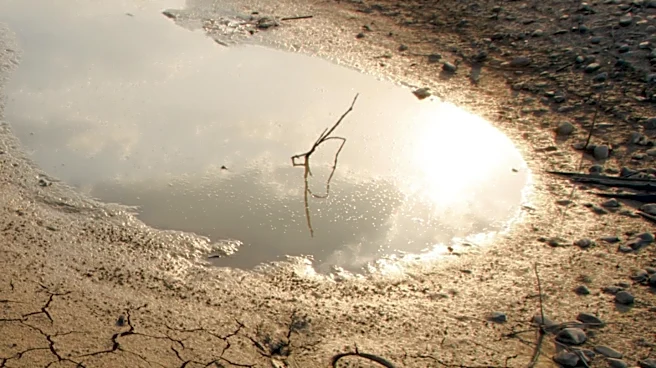
Residents in rural Chino Valley, Arizona, are increasingly dependent on water haulers as their private wells run dry due to prolonged groundwater overdraft and insufficient recharge. The Prescott Active Management Area, which includes Chino Valley, has
been designated outside of safe yield by the Arizona Department of Water Resources for 27 years, meaning more water is being extracted than replenished. This situation is exacerbated by regional growth, with Prescott Valley adding 10,000 residents in the last decade. Water haulers like Adam Brice deliver water to approximately 90-100 regular customers, many of whom are elderly or unable to haul water themselves. The issue is attributed to reduced incidental recharge from drought and climate change, coupled with increased groundwater pumping. While local governments are exploring regional cooperation and stormwater retention, individual homeowners are also considering solutions like rainwater harvesting, though it is not yet a widespread practice.
Why It's Important?
This water crisis in rural Arizona highlights the severe consequences of unsustainable water management and climate change on local communities. The reliance on water haulers creates significant financial burdens for residents, with costs ranging from $85 to $125 per 1,000-2,000 gallons. This situation could serve as a precursor for other regions in Arizona, especially as the state faces a 30% reduction in Colorado River water allocations. The lack of a backup water supply, unlike areas such as Phoenix which import water, makes the Prescott AMA particularly vulnerable. The crisis also underscores the need for unified regional water management, as current fragmented approaches are proving ineffective. Without comprehensive solutions, the economic stability and quality of life for residents in these areas will continue to deteriorate, potentially leading to displacement or increased poverty.
What's Next?
Local governments in the Prescott Active Management Area, including Prescott, Prescott Valley, Chino Valley, and Dewey-Humboldt, are discussing regional cooperation and the potential establishment of a regional water authority. Mark Holmes, water advisor for Chino Valley, advocates for such an authority to manage water conservation and combat overdraft through a unified approach. The City of Prescott is also developing a long-term water management plan to evaluate future demand, existing supply, and identify conservation strategies. Additionally, there is a push to prioritize stormwater recharge, with proposals for cost-benefit analyses to determine if it's a more economical solution than building infrastructure for water collection from distant basins. For residents, the immediate future involves continued reliance on water haulers and individual efforts like rainwater harvesting, while awaiting broader governmental solutions.
Beyond the Headlines
The water crisis in Chino Valley reveals deeper systemic issues beyond immediate supply shortages. It exposes the vulnerability of communities heavily reliant on groundwater in the face of climate change and rapid population growth. The situation also brings to light the ethical dimensions of water access, as vulnerable populations, such as the elderly and those with health issues, are disproportionately affected. The competition for water resources between municipalities and private well owners, exacerbated by exempt wells that don't report data, points to regulatory gaps. Furthermore, the region's unique challenge of having minimal agricultural water use means it cannot implement efficiency measures or retire agriculture to help the aquifer, unlike other parts of the state. This necessitates innovative, non-traditional solutions and a fundamental shift in how water is valued, managed, and conserved in arid regions.