



What's Happening?
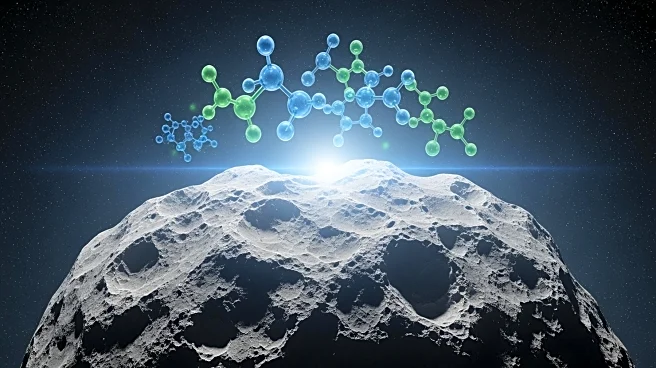
NASA's OSIRIS-REx mission has discovered amino acids on the asteroid Bennu, challenging previous beliefs about the conditions necessary for their formation. The amino acids were found to have formed beyond the 'snow line,' a region too cold for liquid
water, suggesting that these building blocks of life can form in environments previously considered inhospitable. The study identified 14 of the 20 amino acids found in life on Earth, alongside others not used by terrestrial life. This discovery raises questions about the potential for life to originate in diverse cosmic environments.
Why It's Important?
The presence of amino acids on Bennu suggests that the building blocks of life can form in a wider range of environments than previously thought. This expands the potential for life beyond Earth, as it indicates that amino acids could be more common in the universe. The findings could reshape our understanding of how life might arise on other planets and moons, influencing future space exploration and the search for extraterrestrial life. The discovery also provides insights into the early solar system and the processes that may have contributed to the emergence of life on Earth.