




What's Happening?
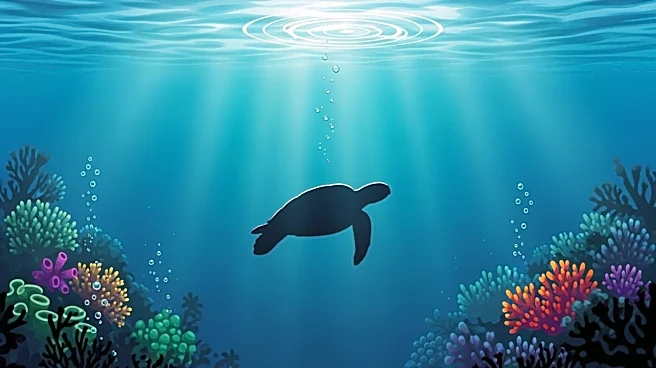
Meatloaf, a rescued green sea turtle, is undergoing rehabilitation at the Aquarium of the Pacific in Long Beach after suffering a severe flipper injury. The turtle was found entangled in fishing line and rope in the San Gabriel River, which had cut into
her flipper, necessitating urgent medical care. Despite the severity of her injuries, Meatloaf is in generally good condition and has been recovering for three months since her first surgery. The aquarium's vice president of animal care, Nate Jaros, noted that while the turtle is showing promising signs of healing, full recovery could take up to a year. The aquarium's sea turtle rehabilitation area, which opened in January, provides a space for rescued turtles like Meatloaf to recover, and is one of only two such facilities in Southern California.
Why It's Important?
Meatloaf's situation underscores the broader environmental challenges facing marine wildlife along the Southern California coast. The entanglement of sea turtles in debris is a recurring issue, exacerbated by urban runoff and pollution in river environments. These areas, while attractive to turtles for their warmth and food sources, pose significant risks due to the accumulation of trash and plastic waste. The Aquarium of the Pacific's efforts not only aim to rehabilitate individual turtles but also raise public awareness about the impact of pollution on marine ecosystems. By allowing public viewing of the rehabilitation process, the aquarium educates visitors on the complexities of marine animal care and the importance of environmental conservation.
What's Next?
The continued recovery of Meatloaf will be closely monitored by the aquarium's veterinary team, with the hope that she can eventually be released back into the wild. The aquarium will maintain its efforts to rescue and rehabilitate other sea turtles in the region, working alongside volunteers and organizations like the National Oceanic and Atmospheric Administration. These efforts are crucial in addressing the ongoing threats to marine wildlife and promoting sustainable practices to reduce pollution and protect vulnerable species.