





What's Happening?
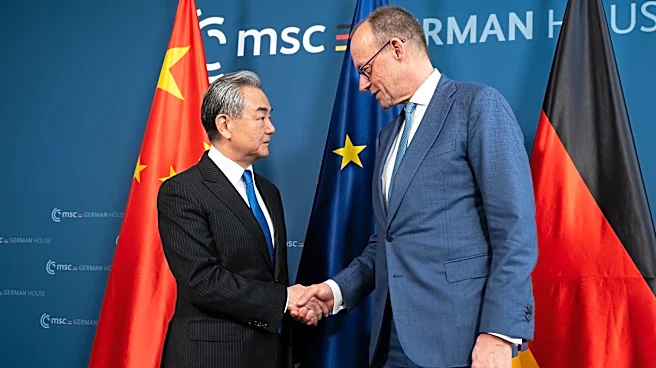
On November 4, 2026, the 11th Lancang-Mekong Cooperation (LMC) Foreign Ministers’ Meeting took place in Beijing, co-chaired by Member of the Political Bureau of the CPC Central Committee and Foreign Minister Wang Yi and Deputy Prime Minister and Minister of Foreign Affairs
of Thailand Sihasak Phuangketkeow. The meeting was attended by foreign ministers from Cambodia, Laos, Vietnam, and Myanmar. Wang Yi highlighted the LMC's decade of progress, transitioning from framework building to deep engagement, and emphasized its role as a dynamic example of regional cooperation. He proposed a five-point plan to advance 'LMC 2.0,' focusing on strengthening solidarity, fostering opening-up and win-win outcomes, promoting green innovation, consolidating security, and enhancing disaster management. The meeting adopted the 2025 Implementation Progress Report on the Five-Year Plan of Action on Lancang-Mekong Cooperation (2023-2027) and the 2026 List of Projects Supported by the Lancang-Mekong Cooperation Special Fund.
Why It's Important?
This meeting is significant for U.S. interests as it underscores China's growing influence and strategic initiatives in Southeast Asia, a region critical for global trade and geopolitical stability. The LMC, under China's leadership, aims to deepen economic integration, infrastructure connectivity, and security cooperation among the Mekong riparian states. Wang Yi's five-point proposal, particularly regarding economic development, digital transformation, and security, could further solidify China's economic and political ties in the region. This could potentially reshape regional power dynamics and trade routes, impacting U.S. economic engagement and strategic alliances in the Indo-Pacific. The emphasis on opposing external interference and bloc confrontation also signals China's intent to counter U.S. influence and promote its own vision for regional order, which could lead to increased competition for influence in the area.
What's Next?
The LMC countries are expected to continue implementing the adopted Five-Year Plan of Action and the projects supported by the Special Fund. The proposals put forth by Wang Yi will likely guide future cooperation, with a focus on aligning development strategies, expanding trade and investment, and enhancing collaboration in emerging sectors like AI and smart manufacturing. The commitment to strengthening security cooperation, particularly against cross-border crimes and external interference, suggests a continued effort to maintain regional stability under the LMC framework. The upcoming fifth LMC Leaders’ Meeting will be crucial in solidifying these initiatives and setting the strategic direction for the next phase of cooperation. The U.S. will likely monitor these developments closely, as they could influence regional economic opportunities and security partnerships.
Beyond the Headlines
Beyond the immediate diplomatic outcomes, the LMC meeting highlights a broader trend of regional blocs forming and strengthening, often with a dominant power at their core. China's proactive role in the LMC reflects its strategy to build a 'community with a shared future for humanity,' starting with its immediate neighbors. This approach emphasizes economic interdependence and shared security concerns, potentially creating an alternative model to Western-led international institutions. The focus on 'Asian values' and opposition to 'bloc confrontation' can be interpreted as an effort to foster a regional identity that prioritizes internal cooperation over external alliances, which could have long-term implications for the U.S.'s traditional alliance structures in Asia. The success of LMC 2.0 will be a test case for China's ability to translate its economic power into sustained geopolitical influence.