









What's Happening?
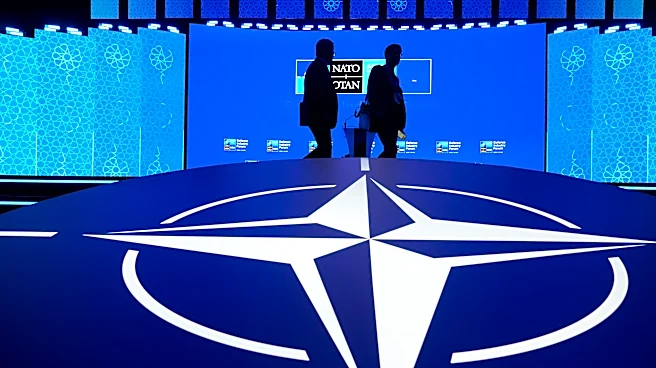
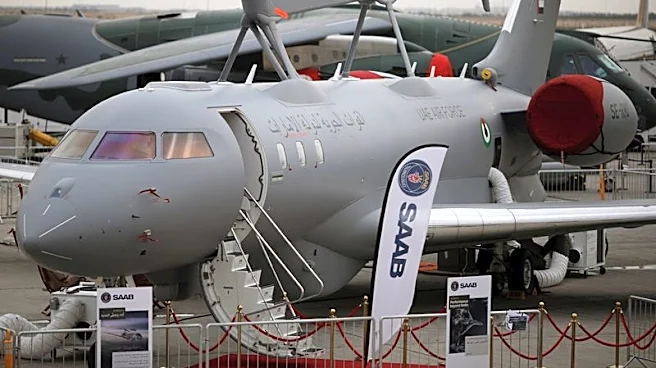
NATO has decided to procure 10 GlobalEye aircraft from Saab, a Swedish company, for its next-generation radar plane, bypassing Boeing's E-7 Wedgetail. This decision was announced during the NATO Defence Industry Forum in Ankara, Turkey. The choice was influenced
by the U.S. Pentagon's initial decision to exclude funding for the E-7 in the 2027 budget, although this decision was later reversed. The GlobalEye aircraft, valued at approximately $4.5 billion, will replace the aging Boeing E-3 Airborne Warning and Control Systems. The procurement involves several NATO countries, including Belgium, Canada, and Germany, and is expected to enhance NATO's airborne early warning capabilities.
Why It's Important?
The selection of Saab's GlobalEye over Boeing's E-7 highlights shifting dynamics in defense procurement within NATO. This decision reflects a strategic move to diversify suppliers and reduce reliance on U.S. military technology. It also underscores the importance of adaptability and long-term operational advantages in defense capabilities. The procurement of GlobalEye is expected to strengthen NATO's surveillance and reconnaissance capabilities, which are crucial for addressing modern security threats. This move may also influence future defense procurement strategies and partnerships within the alliance.
What's Next?
The procurement process for the GlobalEye aircraft will continue, with deliveries expected to begin by 2030. NATO members will need to coordinate efforts to integrate these new systems into their existing defense frameworks. The decision may prompt Boeing to reassess its strategies and offerings to remain competitive in the defense market. Additionally, the shift towards Saab's technology could lead to further collaborations and innovations in defense capabilities among NATO allies. The outcome of this procurement could set a precedent for future defense acquisitions and partnerships within the alliance.