








What's Happening?
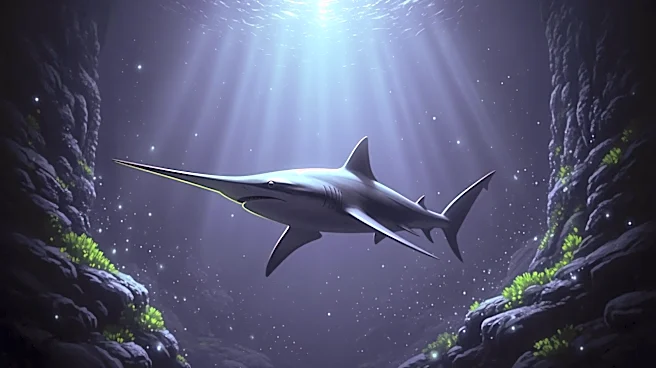
Marine biologists have observed the goblin shark, Mitsukurina owstoni, alive in its natural deep-sea habitat for the first time. The sightings occurred in the Pacific Ocean's Tonga Trench and near Jarvis Island, as detailed in a study published in the Journal
of Fish Biology. These observations were made using remote, baited cameras during expeditions in 2019 and 2024. The goblin shark, known for its distinctive appearance and ancient lineage, was previously only seen when caught by fishermen. The new findings extend the known geographic and depth range of this species, providing valuable data for understanding its ecology.
Why It's Important?
The live observation of goblin sharks in their natural environment is a significant advancement in marine research, highlighting the potential for new discoveries in deep-sea ecosystems. This expansion of the shark's known range could influence conservation strategies and biodiversity assessments. Understanding the habitat and behavior of the goblin shark can aid in the development of protective measures, especially as deep-sea environments face increasing threats from human activities. The study emphasizes the need for continued exploration and documentation of marine life to inform conservation efforts.
What's Next?
Researchers are likely to continue exploring the newly identified habitats of the goblin shark to gather more comprehensive data on its distribution and ecological role. This may involve further expeditions and the use of advanced technology to monitor the species in its natural setting. The findings could lead to discussions on the implementation of conservation policies to protect the goblin shark and its habitat from potential threats such as deep-sea mining. Additionally, the study may inspire further research into other deep-sea species and their ecosystems.