








What's Happening?
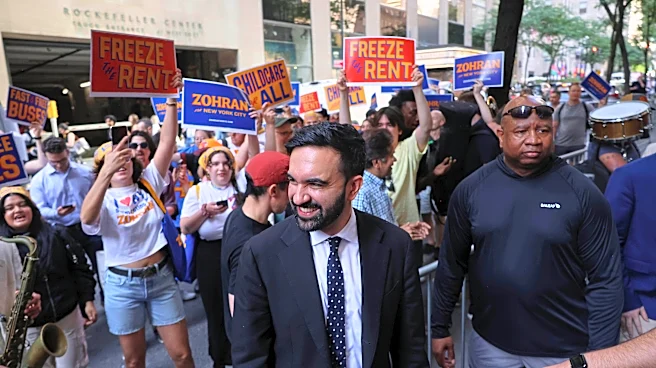
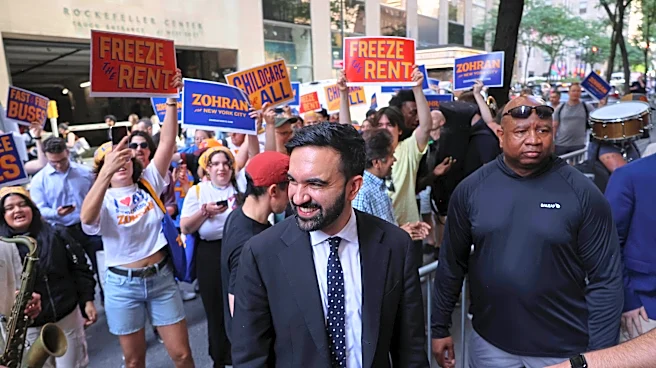
Candidates endorsed by New York City's democratic-socialist mayor, Zohran Mamdani, have won the city's primary elections, raising concerns among conservative and centrist groups about the Democratic Party's direction. The winners, Brad Lander, Claire
Valdez, and Darializa Avila Chevalier, were labeled the 'hateful slate' by the New York Post. Despite the alarm, the Democratic Party's moderate wing remains influential, with its diversity in class and ethnicity contributing to its ideological variety. The victories in New York are part of a broader trend, with democratic socialists gaining positions in other cities like Seattle and Washington, D.C. However, these results reflect local political climates rather than a nationwide shift, as different regions demand different political approaches.
Why It's Important?
The rise of democratic socialists in urban areas highlights a shift in political dynamics within the Democratic Party, emphasizing issues like housing, food, and child care costs. This trend could influence the party's policy priorities and electoral strategies, particularly in cities with left-leaning constituencies. The success of these candidates suggests a growing demand for alternatives to traditional Democratic policies, potentially affecting national discourse. However, the party's moderate wing remains significant, indicating that the Democratic Party will continue to be a coalition of diverse ideologies. This development could lead to internal debates on policy direction and electoral strategies, impacting future elections and governance.
What's Next?
The success of democratic socialists in local elections may encourage similar candidates to run in other urban areas, potentially reshaping the Democratic Party's platform. As these candidates take office, their ability to address local issues like jobs, public safety, and affordability will be crucial in determining their long-term success. The party may face challenges in balancing the demands of its diverse constituencies, with potential implications for national elections. Observers will watch how these developments influence the party's stance on key issues, such as economic inequality and social justice, and whether they lead to broader changes in the party's leadership and policy priorities.
Beyond the Headlines
The rise of democratic socialists could lead to a reevaluation of the Democratic Party's relationship with its traditional power bases, including labor unions and minority communities. This shift may also provoke reactions from conservative groups, potentially intensifying political polarization. The emphasis on local issues by these candidates highlights the importance of grassroots organizing and community engagement in modern politics. Additionally, the success of these candidates may inspire similar movements in other countries, reflecting a global trend towards more progressive policies in urban centers.