




What's Happening?
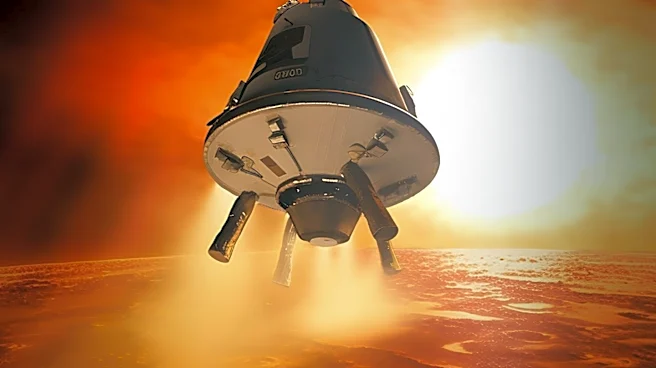
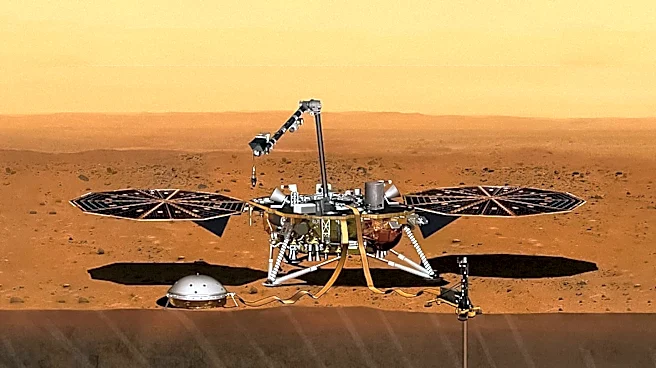
NASA's search for life on Mars continues to be a topic of debate among scientists. The Viking landers, which touched down on Mars in 1976, were the first missions to search for signs of life on another planet. While their results were inconclusive, some
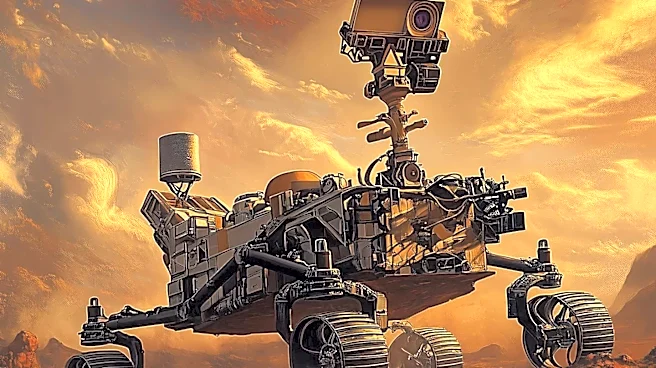
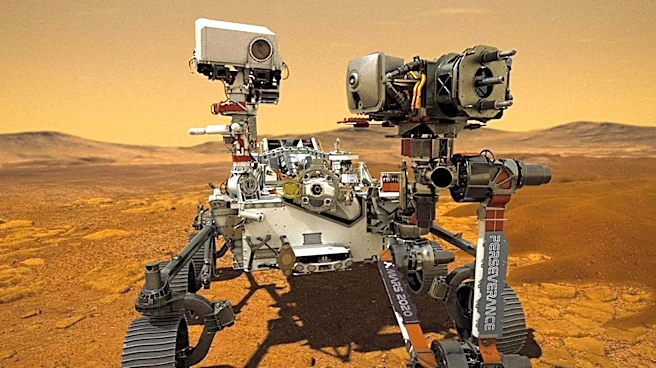
scientists believe that evidence of life may have been overlooked due to the conservative burden of proof required for such claims. Recent missions, including the Curiosity and Perseverance rovers, have found intriguing signs that suggest ancient Mars could have been habitable. However, definitive proof of life remains elusive, and the scientific community continues to grapple with the challenges of interpreting potential biosignatures.
Why It's Important?
The search for life on Mars is significant as it addresses fundamental questions about the existence of life beyond Earth. Discovering life on Mars would have profound implications for our understanding of biology, the origins of life, and the potential for life elsewhere in the universe. The ongoing debate highlights the complexities of astrobiology and the need for rigorous scientific methods to distinguish between biological and non-biological processes. This research not only advances our knowledge of Mars but also informs future missions and the development of technologies to explore other celestial bodies.
What's Next?
Future missions to Mars are expected to continue the search for life, with a focus on returning samples to Earth for detailed analysis. The Mars Sample Return mission, although currently defunded, remains a priority for scientists who believe that studying Martian rocks in Earth-based laboratories could provide the evidence needed to confirm or refute the presence of life. Advances in technology, such as AI-augmented robotic explorers, may enhance our ability to detect and analyze potential biosignatures. The scientific community is also working towards developing quantitative methods to assess the likelihood of life, which could lead to more definitive conclusions in the future.