





What's Happening?
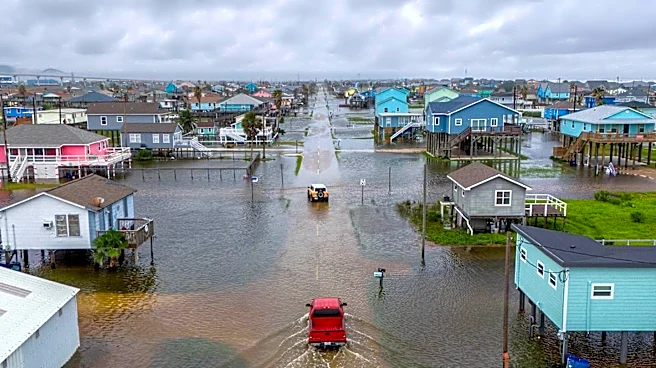
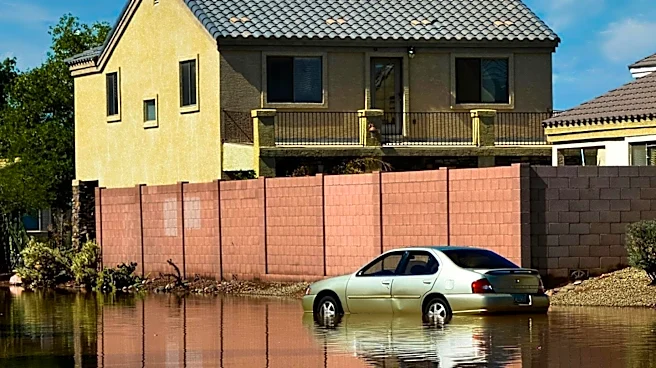
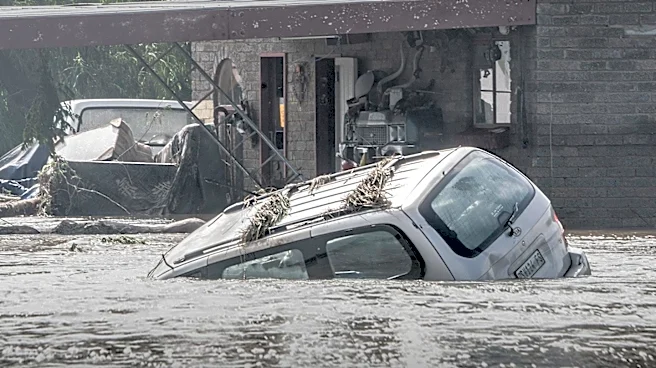
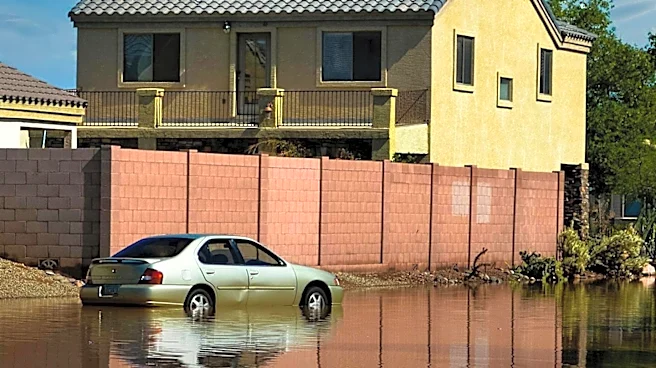
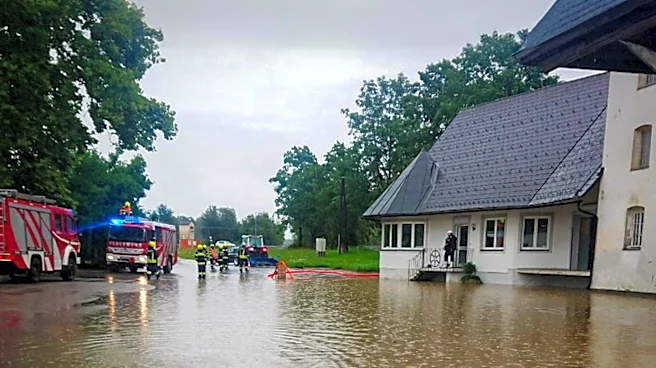
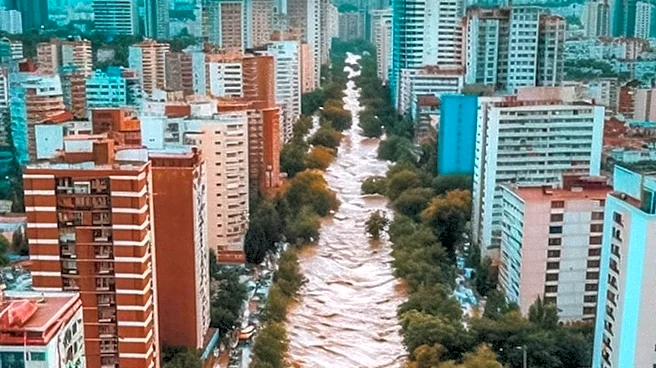
Beaver County in Utah has declared a flash flood emergency following catastrophic flooding caused by runoff from the Cottonwood Burn Scar. The flooding has resulted in massive debris flows that have moved towards residential neighborhoods, prompting evacuations.
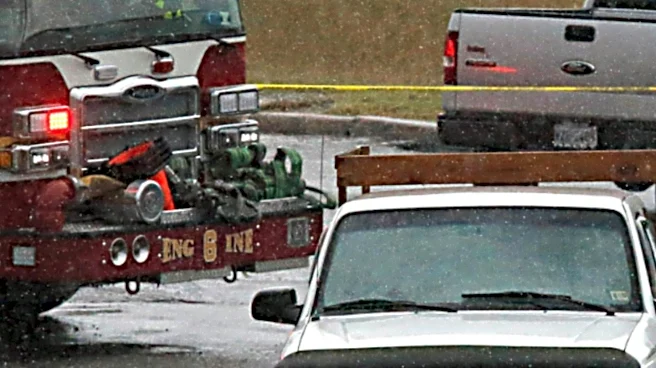
The situation has been exacerbated by ongoing monsoon storms across Utah, which have also led to mudslides, including one that shut down both directions of Interstate 15 near Beaver. In response to the crisis, Beaver City has launched an early warning system with live cameras to monitor stream flows on the Beaver River Channel. However, these cameras have gone dark, complicating efforts to manage the situation. Residents have been advised to avoid tap water due to contamination concerns, and local leaders are addressing water and power issues as the community grapples with the aftermath of the floods.
Why It's Important?
The flash flood emergency in Beaver County highlights the increasing frequency and severity of extreme weather events, which pose significant risks to communities. The flooding has disrupted transportation, with major highways closed, and has raised public health concerns due to water contamination. The situation underscores the need for effective disaster preparedness and response systems, particularly in areas prone to natural disasters. The economic impact is also notable, as infrastructure damage and emergency response efforts strain local resources. This event serves as a reminder of the broader challenges posed by climate change, which is expected to increase the frequency of such extreme weather events.
What's Next?
As the community continues to deal with the immediate impacts of the flooding, efforts will likely focus on recovery and rebuilding. Authorities may need to enhance infrastructure resilience to better withstand future events. The effectiveness of the early warning system will be evaluated, and improvements may be necessary to ensure it functions during critical times. Additionally, there may be increased advocacy for policies addressing climate change and its impacts on local communities. The response from state and federal agencies will be crucial in providing the necessary support and resources for recovery.