
What's Happening?
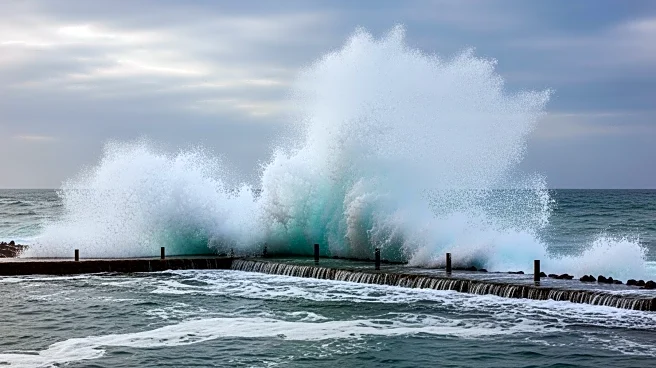
A tragic incident occurred at a popular seawater pool on the Spanish island of Tenerife, where a powerful wave swept a group of swimmers out to sea. The event resulted in the deaths of four individuals,
with one person still missing. The pool, located at Isla Cangrejo on Tenerife's Los Gigantes coast, is known for its scenic views and is frequented by tourists. However, it is also notorious for being dangerous during rough sea conditions. The rescue operation, which involved jet skis and helicopters, managed to recover three bodies on Sunday, including a 35-year-old man, a 55-year-old woman, and another unidentified man. A fourth victim, a woman, succumbed to her injuries on Monday after being airlifted to a hospital. Local authorities had issued a weather advisory for rough seas, and the pool had been closed to swimmers since December 3. Despite warnings and barriers, some swimmers ignored the signs, leading to the tragic outcome.
Why It's Important?
This incident highlights the critical importance of adhering to safety advisories and respecting natural hazards, especially in tourist areas. The tragedy underscores the potential dangers posed by natural attractions that, while beautiful, can become perilous under certain conditions. It also raises questions about the effectiveness of current safety measures and the need for increased awareness and enforcement to prevent similar incidents. The economic impact on the local tourism industry could be significant, as safety concerns might deter future visitors. Additionally, the event serves as a reminder for local authorities to reassess and possibly enhance their safety protocols to protect both residents and tourists.
What's Next?
Authorities are continuing their search for the missing swimmer, and there may be further investigations into the incident to determine if additional safety measures are needed. The local government might consider implementing stricter enforcement of safety advisories and possibly redesigning the pool area to prevent future accidents. There could also be discussions about increasing public awareness campaigns to educate tourists about the risks associated with natural attractions, especially during adverse weather conditions.