
What's Happening?
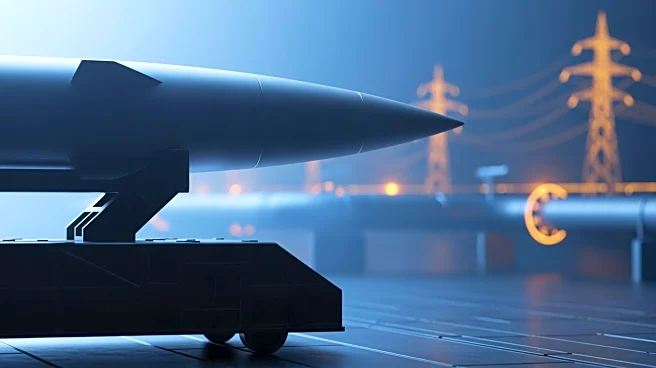
On January 9, 2026, Russia launched a significant military strike on Ukraine, utilizing the Oreshnik intermediate-range ballistic missile. This attack, described by Ukrainian authorities as involving hundreds
of drones and dozens of missiles, resulted in at least four fatalities and over two dozen injuries in Kyiv. The assault also caused damage to multiple buildings, including one near the Qatari embassy, highlighting the diplomatic and civilian repercussions. Russian officials claim the operation was a response to an alleged Ukrainian drone strike on a residence used by President Vladimir Putin, a claim Ukraine denies. The strike targeted critical infrastructure, including a natural gas storage facility in the Lviv region, raising concerns about European energy security as winter continues.
Why It's Important?
The deployment of the Oreshnik missile by Russia marks a significant escalation in the ongoing conflict with Ukraine, with potential implications for European energy security. The targeting of energy infrastructure in Ukraine could disrupt energy supplies, affecting not only Ukraine but also neighboring European countries reliant on these resources. The use of advanced military technology like the Oreshnik, capable of hypersonic speeds and multiple warheads, underscores the increasing sophistication and potential destructiveness of the conflict. This development may prompt Western governments to reconsider their diplomatic and military strategies in response to Russia's actions, potentially leading to increased tensions and further destabilization in the region.
What's Next?
The international community, particularly Western governments, is likely to seek clearer responses and potentially impose further sanctions on Russia. Investigations into the strike's legality under the laws of armed conflict may be pursued, focusing on the targeting of dual-use or civilian infrastructure. The situation could lead to increased military support for Ukraine from Western allies, as well as heightened diplomatic efforts to de-escalate tensions. The ongoing conflict and its impact on energy security may also prompt European countries to accelerate their search for alternative energy sources to reduce dependency on Russian supplies.
Beyond the Headlines
The use of the Oreshnik missile highlights the evolving nature of modern warfare, where advanced technology plays a crucial role. This development raises ethical and legal questions about the use of such weapons, particularly in conflicts involving civilian infrastructure. The strike's impact on diplomatic relations, especially with countries like Qatar, whose embassy was affected, could lead to broader geopolitical shifts. Additionally, the conflict's strain on energy resources may accelerate global discussions on energy independence and the transition to renewable energy sources.