What's Happening?
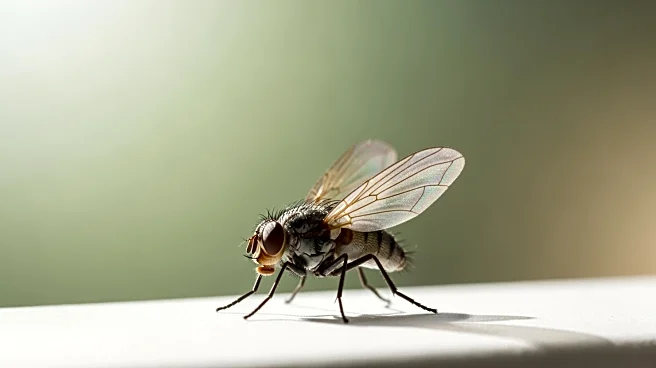
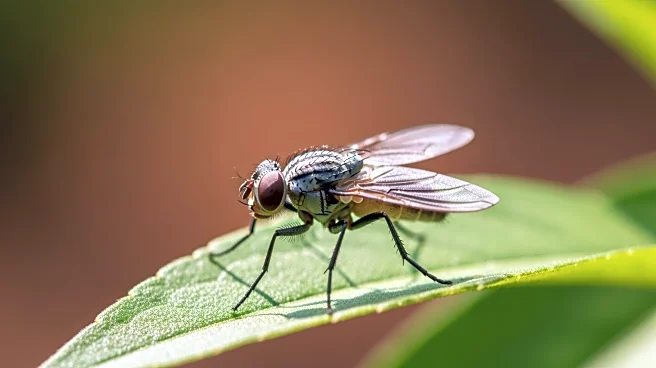
Mexico has reported a significant reduction in active cases of the New World screwworm, a flesh-eating parasite that has affected livestock trade with the United States. According to Mexico's agriculture
ministry, active cases have decreased by 57% since mid-December, dropping from 1,145 to 492 as of January 7. The outbreak, which has spread northward through Central America into Mexico, has led to the U.S. maintaining a mostly closed border to Mexican cattle imports since May. To combat the outbreak, Mexico is constructing a factory in Chiapas state to breed sterile flies, which will be released to reduce the screwworm population. The factory is 48% complete and is expected to start operations in the first half of the year, producing 200 million flies weekly.
Why It's Important?
The reduction in screwworm cases is crucial for Mexico's livestock industry and its trade relations with the United States, its largest trading partner. The outbreak has strained these relations, as the U.S. has restricted cattle imports to prevent the spread of the parasite. The successful control of the screwworm population could lead to the reopening of the border for cattle trade, benefiting Mexican cattle producers and potentially stabilizing beef supply chains. Additionally, the use of sterile flies as a biological control method represents a significant step in sustainable pest management, which could serve as a model for other regions facing similar challenges.
What's Next?
As Mexico continues its efforts to control the screwworm outbreak, the completion and operation of the sterile fly factory will be pivotal. If successful, this strategy could lead to a further decline in screwworm cases, potentially prompting the U.S. to reconsider its import restrictions. This development could also encourage further collaboration between the two countries in addressing agricultural pests. Stakeholders in the livestock industry will be closely monitoring the situation, as the reopening of the border could have significant economic implications for both Mexican and U.S. cattle markets.