
What's Happening?
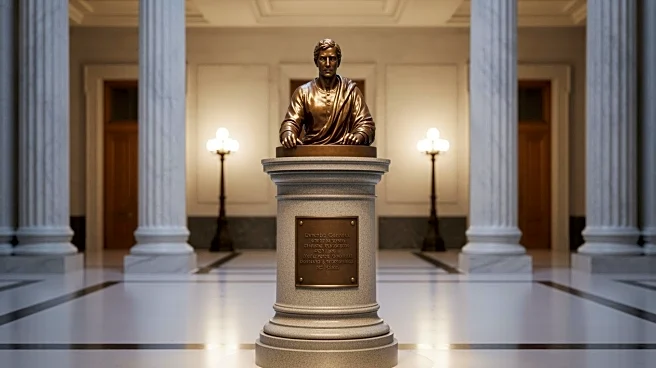
In a significant historical moment, a statue of Barbara Rose Johns was unveiled in the U.S. Capitol, replacing that of Confederate General Robert E. Lee. Barbara Johns, a Black teenager, led a pivotal
walkout in 1951 at her segregated high school in Farmville, Virginia, protesting against inadequate educational facilities. This protest became one of the cases reviewed in the landmark Brown v. Board of Education Supreme Court decision, which declared school segregation unconstitutional. The statue, created by artist Steven Weitzman, depicts Johns at a podium, symbolizing her leadership and courage. The unveiling ceremony was attended by numerous Virginia officials, members of Congress, and over 200 of Johns' family members, celebrating her legacy as a civil rights pioneer.
Why It's Important?
The installation of Barbara Johns' statue in the U.S. Capitol is a powerful symbol of progress and recognition of the civil rights movement's impact on American history. It represents a shift in how historical figures are commemorated, moving away from those who upheld segregation and towards those who fought for equality and justice. This change reflects ongoing efforts to address historical injustices and promote a more inclusive narrative. The statue serves as an inspiration for future generations, highlighting the importance of activism and the impact of individual courage in the fight for civil rights.
What's Next?
The unveiling of Johns' statue may encourage further discussions and actions regarding the representation of historical figures in public spaces. It could lead to more initiatives aimed at recognizing and honoring individuals who have contributed to social justice and equality. Additionally, this event may influence educational curricula, prompting schools to incorporate more comprehensive lessons on civil rights history and the individuals who played crucial roles in it. The statue's presence in the Capitol could also inspire legislative efforts to address ongoing racial disparities and promote equality.
Beyond the Headlines
The decision to replace a Confederate statue with that of a civil rights leader like Barbara Johns highlights a broader cultural shift in the United States. It underscores the ongoing reevaluation of historical narratives and the importance of acknowledging the contributions of marginalized communities. This change is part of a larger movement to confront and rectify past injustices, fostering a more inclusive and accurate representation of American history. The statue's installation may also spark debates about the role of public monuments in shaping national identity and collective memory.