





What's Happening?
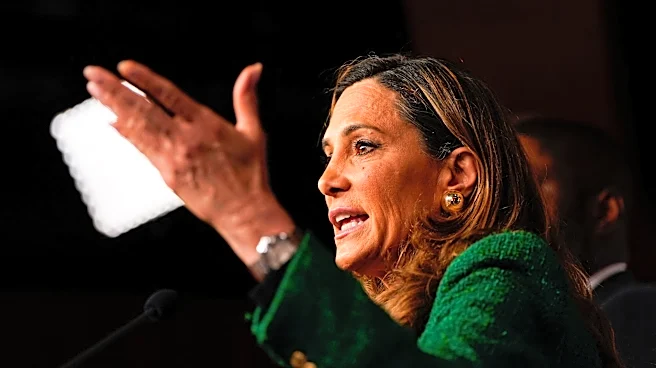
Two Hispanic Republican members of the House, Reps. Maria Elvira Salazar (R-FL) and Monica De La Cruz (R-TX), have released advertisements that distance themselves from President Trump's immigration enforcement operations, specifically those conducted
by Immigration and Customs Enforcement (ICE). These ads come after a survey indicated that a significant portion of Hispanic Texas voters would be less likely to support a candidate who backs President Trump’s deportation policies. Rep. De La Cruz, who represents a predominantly Hispanic district in South Texas, highlighted her advocacy for a wrongfully deported DACA recipient in her commercial, emphasizing a 'people over politics' stance. Rep. Salazar, representing a large Hispanic community in Miami, was more direct, stating that some of President Trump's immigration enforcement efforts have 'gone too far' and that his administration has 'betrayed' Hispanic voters who supported him in the 2024 election. Both representatives did not respond to requests for comment regarding their advertisements.
Why It's Important?
This development is important as it signals a potential shift in how some Hispanic Republican lawmakers are approaching immigration policy, particularly concerning President Trump's stance. The advertisements suggest an acknowledgment of growing discontent among Hispanic voters regarding aggressive immigration enforcement. For President Trump, this could be a warning sign for the 2026 elections, indicating that his support among a crucial demographic may be eroding. The actions of Reps. Salazar and De La Cruz highlight the internal divisions within the Republican party on immigration and the strategic challenges faced by candidates in districts with significant Hispanic populations. Their public distancing from President Trump's policies could influence other Republican candidates in similar districts to re-evaluate their own positions, potentially leading to a broader recalibration of the party's immigration platform to appeal to a wider range of voters. This could also impact the national conversation on immigration, pushing for more nuanced approaches rather than solely focusing on enforcement.
What's Next?
The advertisements from Reps. Salazar and De La Cruz are likely to spark further discussion within the Republican party regarding its immigration strategy, especially as the 2026 election cycle approaches. Other Republican candidates in districts with substantial Hispanic populations may observe the public and electoral reception of these ads to inform their own campaign messaging. President Trump's campaign may need to address these concerns to consolidate his support among Hispanic voters, potentially by adjusting his rhetoric or emphasizing different aspects of his immigration platform. The Democratic party will likely seize upon these divisions, using them to highlight perceived inconsistencies within the Republican stance on immigration and to attract Hispanic voters. The upcoming general elections for both De La Cruz and Salazar will serve as a test of whether this strategy of distancing themselves from President Trump's more stringent immigration policies resonates with their constituents and helps them secure re-election against their Democratic challengers.
Beyond the Headlines
The actions of these two Republican representatives underscore a deeper tension within the Republican party: balancing the appeal to its conservative base, which often favors strict immigration enforcement, with the need to attract and retain support from growing demographic groups, particularly Hispanic voters. This strategic dilemma has long-term implications for the party's electoral viability and its ability to form broad coalitions. The emphasis on 'people over politics' by Rep. De La Cruz and the direct criticism of President Trump's policies by Rep. Salazar suggest a recognition that a purely enforcement-focused approach may be politically unsustainable in certain districts. This could lead to a more compassionate or pragmatic wing emerging within the Republican party on immigration issues, potentially fostering bipartisan dialogue on comprehensive immigration reform in the future. The evolving political landscape demands that parties adapt their platforms to reflect changing demographics and voter sentiments, and these advertisements are a clear manifestation of that ongoing adaptation.