
What's Happening?
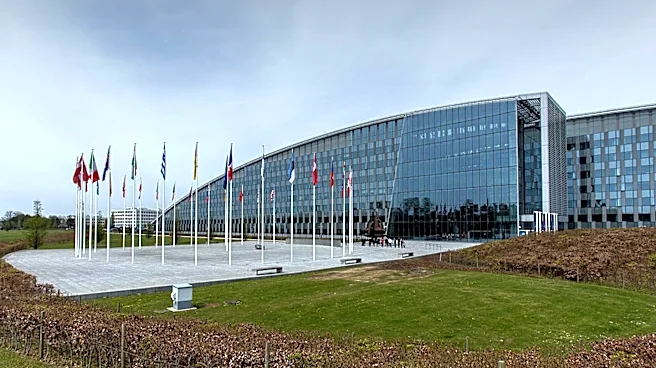
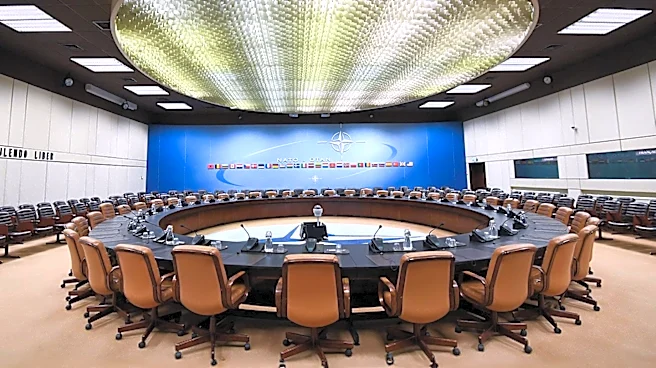
NATO's Logistics Committee recently convened in Brussels, bringing together representatives from allied governments and international partners, including the European Union. The discussions focused on critical
aspects of military readiness, specifically military mobility, logistical standards, infrastructure resilience, host nation support, and cooperation between governments, armed forces, and industry. This meeting aims to contribute to a review of NATO's Logistics Action Plan. The context for these discussions is the ongoing rearmament efforts by European governments and the lessons learned from the conflict in Ukraine, which has highlighted the vulnerabilities of fixed command centers and the importance of mobile, dispersed operations. The committee acknowledged that while defense spending is increasing, the infrastructure supporting military capabilities also needs significant strengthening to ensure effective deployment and sustainment of forces.
Why It's Important?
The meeting of NATO's Logistics Committee is crucial for enhancing the alliance's ability to respond to modern threats. Europe's military mobility has been a persistent weakness, with challenges arising from national regulations, infrastructure limitations, and administrative procedures. The conflict in Ukraine has underscored how quickly airfields and other critical infrastructure can become vulnerable, emphasizing the need for resilient logistics. Strengthening military mobility and supply chain resilience is vital for ensuring that forces can be rapidly deployed, reinforced, and sustained in a contested environment. This directly impacts the credibility of deterrence and the effectiveness of collective defense. The discussions also highlight the necessity of integrating civilian infrastructure and commercial resources into military planning, as these are often relied upon during large-scale deployments. Addressing these logistical challenges is essential for translating increased defense procurement into actual military readiness.
What's Next?
The findings from the Logistics Committee meeting will inform a comprehensive review of NATO's Logistics Action Plan, likely leading to updated strategies and policies. Efforts will continue to focus on improving military mobility across Europe, potentially through initiatives like the EU's proposed 'Military Schengen' to simplify cross-border movements. Increased investment in infrastructure development and coordination between transport ministries, customs authorities, and military planners will be critical. Furthermore, NATO will likely emphasize the importance of interoperability, extending beyond operational procedures to include technical standards, maintenance practices, and the availability of essential supplies. The alliance will also work on establishing robust arrangements with commercial companies to ensure continuity of services during emergencies. The goal is to build a more resilient and adaptable logistics network capable of supporting sustained military operations.
Beyond the Headlines
The focus on logistics and supply chain resilience extends beyond immediate military concerns, touching upon broader issues of national security and economic stability. The recognition that civilian resilience is a military requirement highlights the interconnectedness of various sectors—energy, telecommunications, transport—in supporting defense efforts. Disruptions in these areas, whether from cyberattacks, natural disasters, or hostile activities, can severely impact military operations and civilian populations. This necessitates a 'whole-of-society' approach, involving not just governments but also industry and civil society, to build overall resilience. The discussions also implicitly address the challenges of 'contested logistics,' where adversaries aim to disrupt supply lines from origin to destination. This calls for innovative solutions, such as hub-and-mesh architectures, to ensure continuous flow of combat power even under attack. The long-term implications include a fundamental shift in how nations plan for and sustain military operations, emphasizing adaptability, redundancy, and robust civil-military cooperation.