




What's Happening?
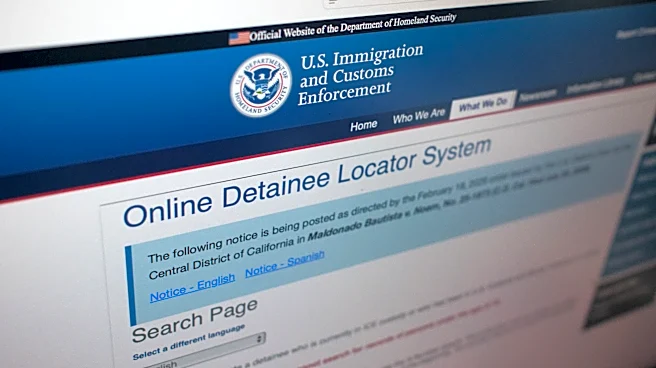
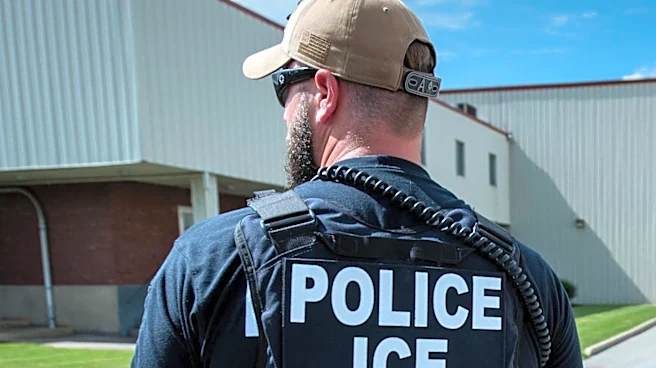
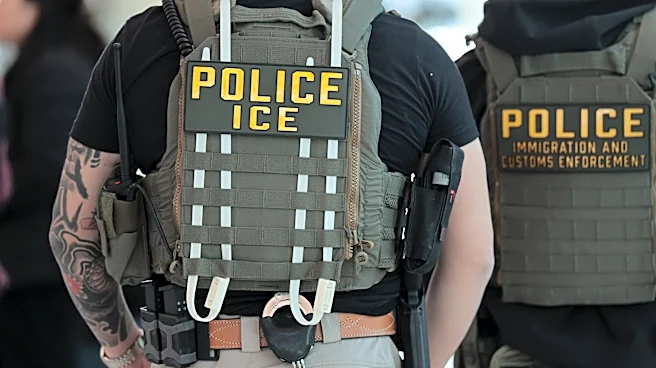
The San Diego County Medical Examiner’s (ME) office has officially identified a man who died in U.S. Immigration and Customs Enforcement (ICE) custody at the Otay Mesa Detention Center as Guillermo Pasqual Verganza, 43, a Guatemalan national. This identification
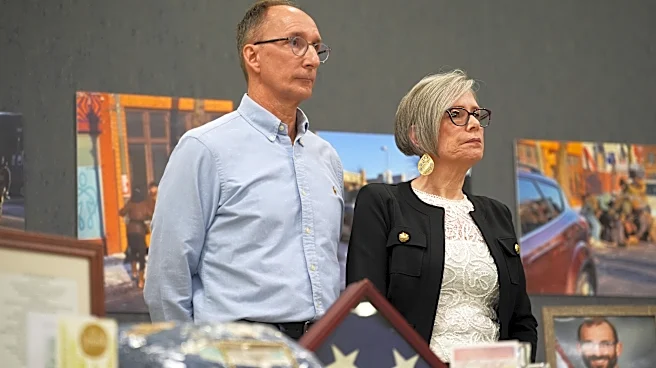
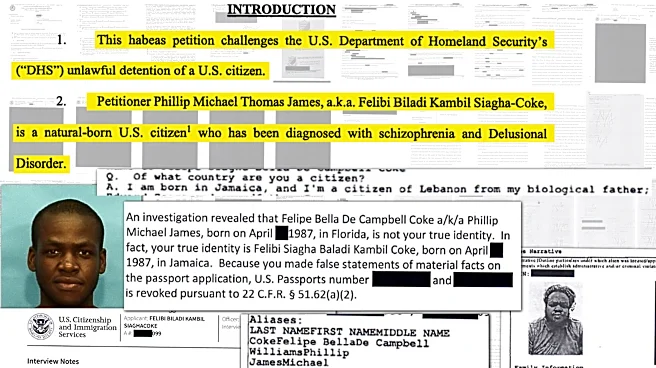
contradicts ICE's initial report, which named the deceased as Roberto Jimenez Gutierrez. An ICE spokesperson stated that the detainee provided false information and used multiple aliases to mislead law enforcement. The ME's office verified Verganza's identity through fingerprints via the Department of Justice and California ID databases, and by matching the information against his Guatemalan passport. Additionally, the ME's office took the unusual step of having his family positively identify him through a photo due to the case's unique circumstances. Salvador Sarmiento, an attorney with the National Day Laborer Network, described the situation as potentially criminal negligence, questioning ICE's duty of care.
Why It's Important?
This incident raises significant concerns regarding ICE's protocols for identifying individuals in its custody and the potential implications for due process and human rights. The discrepancy in identification, coupled with ICE's claims of the detainee providing false information, highlights challenges in maintaining accurate records within detention facilities. If ICE's initial identification was incorrect, it could call into question the validity of any associated criminal history or allegations, as noted by Verganza's family who denies the charges ICE initially attributed to 'Verganza' (under the mistaken identity). Critics argue that such misidentifications could lead to wrongful accusations or complicate legal proceedings for detainees. The situation also underscores the broader debate about the transparency and accountability of immigration detention practices, particularly concerning the welfare and accurate identification of individuals in federal custody.
What's Next?
ICE has yet to respond to inquiries regarding how it confirms the identity of those in its custody or to questions about the alleged criminal charges initially attributed to the deceased. Benjamin Prado of the American Friends Service Committee emphasized ICE's responsibility to positively identify detainees, suggesting that if misidentification occurred in this case, it could indicate a systemic issue affecting other individuals. The Guatemalan Consulate in Los Angeles is aware of the case and is working with Verganza's family to repatriate his body to Guatemala. Further investigations or calls for increased oversight into ICE's identification procedures and detention practices are likely to follow, especially from immigrant rights advocates and legal organizations.
Beyond the Headlines
The case of Guillermo Pasqual Verganza extends beyond a simple misidentification, touching upon deeper ethical and legal implications within the U.S. immigration system. The use of aliases by detainees, as alleged by ICE, points to the complex realities faced by individuals navigating immigration enforcement, potentially driven by fear, past experiences, or attempts to avoid deportation. However, the responsibility for accurate identification ultimately rests with the detaining authority. This incident could fuel calls for more robust and verifiable identification processes within ICE, potentially involving more immediate and thorough biometric verification and cross-referencing with international databases. It also highlights the emotional and logistical burdens placed on families when such discrepancies arise, particularly in cases involving death in custody, where accurate identification is crucial for grieving and repatriation processes.