


What's Happening?
A recent study conducted by the University of Pittsburgh highlights significant discrepancies between CPR techniques depicted on television and those recommended by health professionals. The study, published in the journal Circulation: Population and Outcomes,
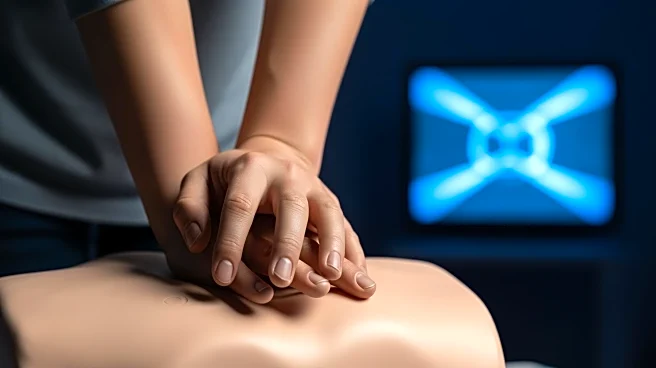
is the first to analyze how TV shows portray bystander CPR. It emphasizes the need for accurate depictions to better instruct the public during emergencies. Since 2008, the American Heart Association has endorsed hands-only CPR, which focuses solely on chest compressions without mouth-to-mouth resuscitation. Despite this, television often continues to show outdated methods, potentially misleading viewers. The study analyzed 169 TV episodes featuring CPR since 2008 and found that less than 30% depicted the procedure correctly. Additionally, many scenes inaccurately portrayed the demographics and settings of cardiac arrest incidents, which could skew public perceptions.
Why It's Important?
The misrepresentation of CPR on television has significant implications for public health and safety. Accurate CPR techniques are crucial in emergencies, as they can mean the difference between life and death. The study suggests that incorrect portrayals may lead to misunderstandings about when and how to perform CPR, potentially causing hesitation or errors in real-life situations. This is particularly concerning given that most cardiac arrests occur at home, affecting loved ones. Furthermore, the study highlights disparities in CPR administration, noting that women and minorities are less likely to receive bystander CPR. Addressing these issues through more accurate media portrayals could improve public readiness and save lives.
What's Next?
The study's authors suggest that collaboration between media creators and public health experts could lead to more accurate portrayals of CPR on television. Such efforts could enhance public understanding and preparedness, ensuring that viewers are equipped to act correctly in emergencies. Future research may explore whether media depictions are merely reflecting societal trends or actively shaping them, particularly regarding demographic disparities in CPR administration.
Beyond the Headlines
The study raises broader questions about the role of media in shaping public health behaviors and perceptions. It suggests that entertainment media has a responsibility to provide accurate information, especially when it comes to life-saving techniques. This could lead to a reevaluation of how health-related content is produced and consumed, potentially influencing future media standards and practices.