






What's Happening?
A proposed bilateral trade agreement between the United States and Argentina is at risk of stalling due to a congressional roadblock in Argentina and demands for renegotiation from President Javier Milei's administration. Argentina has reportedly informed
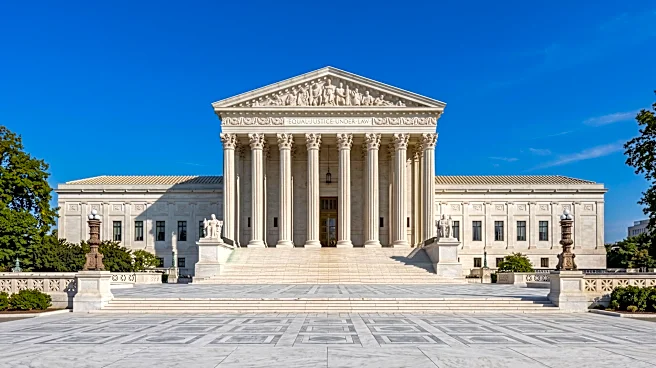
the Trump administration that it lacks the necessary votes in its Congress to ratify the deal, which was signed in February 2026. The primary reason for Argentina's request for renegotiation stems from a U.S. Supreme Court ruling on February 20, which invalidated the presidential authority used to impose tariffs under the International Emergency Economic Powers Act (IEEPA). This decision has altered the legal and commercial assumptions underpinning the trade agreement, making its terms less favorable for Argentina. The U.S. Customs and Border Protection is currently implementing a phased refund process for affected importers, further complicating the operational aftermath of the ruling. The Trump administration, however, is reportedly resisting reopening the text of the agreement, fearing it could set an undesirable precedent for other trade partners. With Argentina's legislative calendar effectively closing in November, the pact faces a tight political timetable.
Why It's Important?
This development is significant for U.S. trade policy as it highlights how judicial limits on executive tariff powers can have far-reaching consequences beyond customs collections, impacting pending agreements, negotiating leverage, and diplomatic commitments. For the United States, the agreement was intended to foster deeper commercial ties with a strategically important South American partner, particularly in sectors crucial for resilient supply chains and diversification away from concentrated sourcing. The potential failure or deferral of this agreement could push Argentina to rely more heavily on other trade blocs like Mercosur, the EU-Mercosur implementation, or China-linked financing, rather than a comprehensive U.S. pact. This shift could undermine U.S. efforts to strengthen economic cooperation in the region and establish more favorable trade frameworks. The situation also underscores the complexities of international trade negotiations, where domestic legal changes can significantly alter the perceived value and viability of agreements, leading to demands for renegotiation and potential diplomatic impasses.
What's Next?
The immediate future will likely involve intensive but challenging diplomatic efforts between the U.S. and Argentina. Argentina may seek targeted adjustments, side letters, implementation assurances, or revised tariff-related provisions to reflect the post-Supreme Court ruling environment. The United States, conversely, might prefer interpretive or administrative accommodations to avoid formally reopening the deal. The key risk is the approaching November deadline for Argentina's legislative calendar. If a politically acceptable solution is not found soon, the negotiation problem could escalate into a legislative lapse, potentially pushing consideration of the agreement into a less predictable future session. If ratified, the agreement could bolster President Milei's reform agenda, enhance bilateral commercial predictability, and deepen U.S.-Argentina strategic economic cooperation. However, if abandoned or deferred, Argentina may pivot towards other regional and international economic partners, potentially altering its geopolitical alignment and trade priorities.
Beyond the Headlines
The impasse surrounding the U.S.-Argentina trade deal reveals deeper implications regarding the interplay between domestic legal systems and international trade agreements. The U.S. Supreme Court's ruling on IEEPA tariffs demonstrates the inherent vulnerability of executive-led trade policies to judicial review, potentially introducing an element of uncertainty into future trade negotiations. This situation could prompt other nations to scrutinize the legal foundations of U.S. trade proposals more closely, potentially demanding stronger assurances against unilateral policy shifts or judicial interventions. Furthermore, the episode highlights the delicate balance President Milei must strike between his pro-market program and the realities of a fragmented Argentine legislature and evolving U.S. legal landscape. It underscores that even strong political alignment does not eliminate bargaining conflicts, especially when domestic ratification and legal changes alter the economic calculus of a deal. This could lead to a broader re-evaluation of how trade agreements are structured and ratified to account for such contingencies, potentially favoring more robust, multi-branch governmental consensus in the U.S. before entering into such pacts.