
What's Happening?
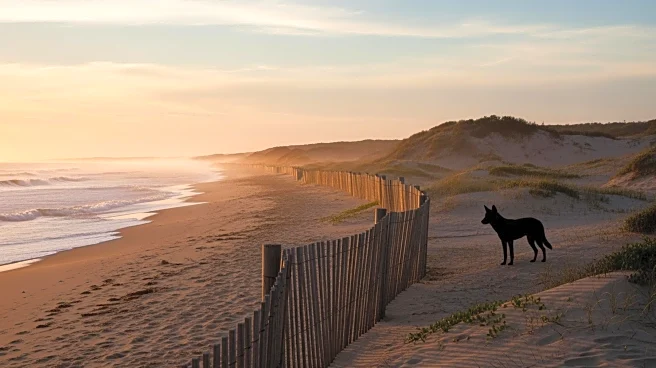
Nineteen-year-old Piper James, a Canadian backpacker, was found dead on K'gari, a national park island off Australia's eastern coast. Her body was discovered surrounded by dingoes, native wild dogs. Preliminary
autopsy results indicate drowning as a possible cause of death, with dingo bites inflicted before and after her death. This incident has reignited discussions about the management of dingoes on the island, where they are both a tourist attraction and a potential threat. The island, known for its natural beauty, attracts half a million visitors annually. The local community is concerned about potential calls for another cull of dingoes, as happened after previous fatal attacks. Piper's father, Todd James, emphasized that his daughter would not have supported harming the animals.
Why It's Important?
The incident highlights the ongoing tension between wildlife conservation and human safety on K'gari. Dingoes are considered a species of national significance in Australia, yet their interactions with humans can lead to dangerous situations. The debate over whether to cull dingoes or implement stricter safety measures reflects broader challenges in managing human-wildlife interactions in natural settings. The outcome of this debate could influence policies on wildlife management and tourism safety, impacting local communities and conservation efforts. The case also underscores the need for better education and safety protocols for tourists and workers on the island.
What's Next?
Authorities are awaiting the full autopsy results to determine the exact cause of Piper's death. Depending on the findings, there may be renewed discussions on dingo management strategies, including potential culls or enhanced safety measures for visitors. The Queensland state premier has ruled out capping visitor numbers, but there may be calls for more stringent regulations, especially during the dingoes' breeding season. The incident could lead to increased advocacy for balancing conservation with public safety, possibly involving the island's traditional custodians, the Butchulla people, in decision-making processes.
Beyond the Headlines
The incident raises ethical questions about human responsibility in wildlife habitats and the cultural significance of dingoes to the Butchulla people. It also highlights the need for sustainable tourism practices that respect both the environment and local communities. The case may prompt a reevaluation of how natural risks are communicated to tourists and how safety measures are enforced. Long-term, it could influence how similar wildlife management issues are addressed in other regions with significant human-wildlife interactions.