




What's Happening?
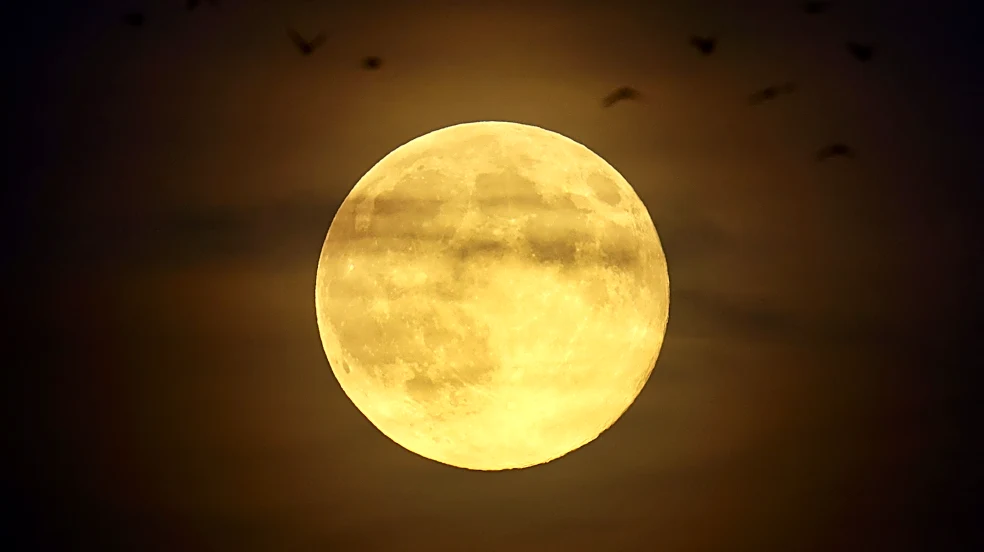
The period between October 24-30, 2026, will present challenges for meteor observers due to the full moon occurring on Monday, October 26. During this time, the moon will be above the horizon throughout the night, significantly obscuring all but the brightest
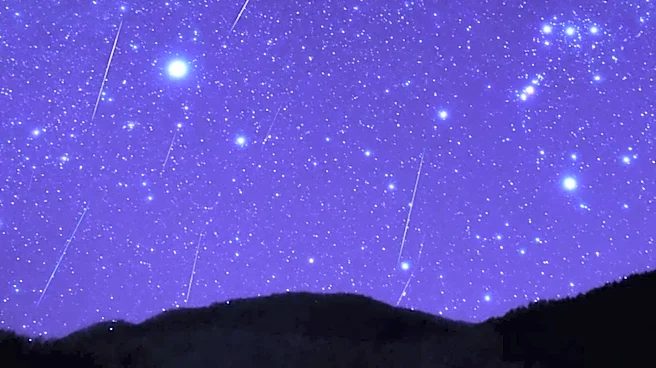
meteors. As the week progresses, a limited window for dark skies will emerge between dusk and moonrise, gradually increasing each night. This period is noted as a suitable time to observe slower-moving meteor showers such as the Taurids and Andromedids. Evening observers in mid-northern latitudes (45°N) can anticipate total hourly rates of approximately two meteors, while tropical southern locations (25°S) may see around one. Morning observers might experience rates near ten from mid-northern latitudes and five from tropical southern locations, though these rates are generally reduced due to moonlight interference. The actual number of visible meteors will also depend on individual perception, local weather, alertness, and observer experience.
Why It's Important?
The lunar phase significantly impacts astronomical observations, particularly for events like meteor showers, which rely on dark skies for optimal viewing. The full moon's brightness effectively creates light pollution, diminishing the visibility of fainter celestial phenomena. This affects amateur astronomers, educational institutions, and public outreach programs that organize stargazing events, potentially leading to reduced participation or less impactful viewing experiences. For scientific observation, bright moonlight can hinder data collection on meteor shower characteristics, such as fainter meteor counts and radiant analysis, which are crucial for understanding meteoroid streams and their parent bodies. The reduced visibility also means that casual observers might miss out on the spectacle of meteor showers, which can inspire interest in science and astronomy. The emphasis on observing slower-moving meteors like the Taurids and Andromedids highlights the need for observers to adapt their strategies based on prevailing sky conditions.
What's Next?
Following the full moon on October 26, observing conditions are expected to gradually improve as the moon wanes and sets later each night, offering longer periods of dark skies before moonrise. This will provide increasing opportunities for meteor enthusiasts to view celestial events. Observers are advised to utilize this growing window of darkness, particularly for spotting meteor showers like the Taurids and Andromedids, which are active during this period. Future meteor activity outlooks will likely detail viewing conditions when they become more favorable, providing specific information on shower characteristics and optimal viewing times. Astronomers and enthusiasts will continue to monitor meteor activity, adapting their observation schedules to align with periods of minimal lunar interference to maximize their chances of successful meteor detection and study.
Beyond the Headlines
The interplay between lunar cycles and astronomical observation underscores a fundamental challenge in ground-based astronomy: the constant battle against natural and artificial light pollution. While artificial light pollution from urban areas is a growing concern, the moon's natural brightness has always been a factor for observers. This highlights the importance of planning astronomical events around lunar phases, a practice that has been central to observational astronomy for centuries. Furthermore, the detailed meteor activity outlooks, which account for factors like observer latitude, personal perception, and local conditions, reflect the scientific rigor applied to amateur astronomy. This level of detail not only aids enthusiasts but also contributes to a broader understanding of meteoroid streams, their origins, and their interactions with Earth's atmosphere, reinforcing the value of citizen science in astronomical research.