





What's Happening?
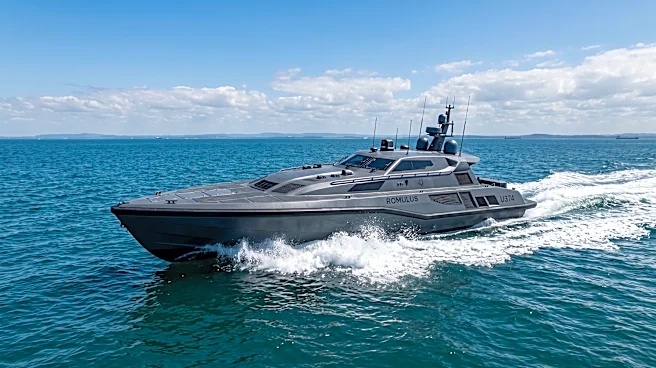
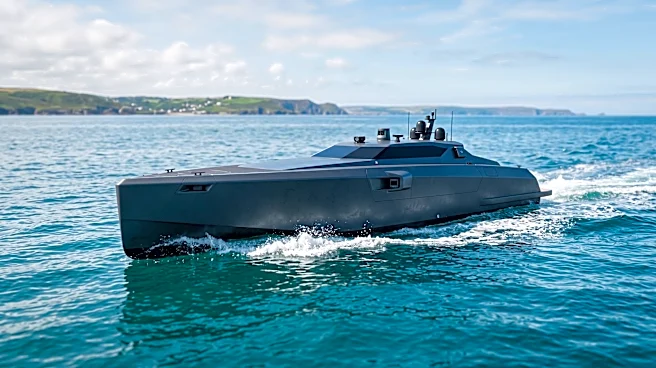
Saronic Technologies has been awarded a prototype other transaction (OT) agreement by the Defense Innovation Unit (DIU) to develop and deliver its Autonomous Low Profile Vessel (ALPV). This ALPV is designed as a long-range autonomous logistics connector,
aiming to provide resilient and low-cost maritime resupply capabilities for dispersed U.S. Marine Corps forces. The initiative addresses the critical challenge of contested logistics in modern maritime operations, which involves safely delivering food, fuel, and supplies to forces operating within range of enemy weapons without endangering personnel. The ALPV will integrate advanced autonomy and passive perception with a vessel engineered for maneuverability, beachability, and scalable production. Saronic's existing operational autonomy, validated over 350,000 nautical miles and 55,000 hours, will be incorporated into the ALPV. The vessel's low-profile design is intended to facilitate ship-to-ship and ship-to-shore delivery of various supply classes. This contract builds upon Saronic's ongoing collaborations with the U.S. Navy, which include production contracts for its Corsair (24-foot autonomous surface vessel) and Marauder (180-foot autonomous ship), as well as a recent award to construct Landing Craft Utility (LCU) vessels at its Port Alpha shipyard in Brownsville, Texas.
Why It's Important?
This contract signifies a significant advancement in addressing the U.S. Marine Corps' logistical challenges in contested maritime environments. The development of the ALPV aims to reduce the risk to personnel by enabling autonomous resupply missions, which is crucial when operating within the reach of adversary weapon systems. The emphasis on low-cost, scalable, and easily offloadable platforms highlights a strategic shift towards more adaptable and sustainable logistics solutions for military operations. By leveraging advanced autonomy, the ALPV can enhance the operational reach and endurance of dispersed Marine Corps units, improving their ability to sustain operations without relying on traditional, more vulnerable supply chains. This initiative also underscores the growing importance of unmanned systems in modern warfare and logistics, potentially setting a precedent for future military procurement and operational strategies. The success of this program could lead to broader adoption of autonomous logistics connectors across various branches of the U.S. military, impacting defense industry investments and technological development.
What's Next?
Under the agreement, Saronic will collaborate closely with DIU and the Marine Corps to deliver an affordable capability that meets warfighter needs and can be mass-produced. The prototyping effort will support government testing and the Marine Corps' planning for integrating the ALPV into service. This includes developing operational protocols, staffing requirements, training programs, and support infrastructure. The successful development and deployment of the ALPV could lead to further production contracts and broader integration into U.S. Marine Corps logistics operations. Additionally, the technology and operational concepts proven with the ALPV may be adapted for other military applications or even civilian maritime logistics, potentially influencing future defense acquisition strategies and technological advancements in autonomous shipping. Continued collaboration between Saronic and the U.S. Navy suggests a long-term commitment to enhancing autonomous maritime capabilities.
Beyond the Headlines
The development of autonomous logistics vessels like Saronic's ALPV raises broader implications for military strategy and the future of warfare. By removing human operators from dangerous resupply missions, these vessels could fundamentally alter the risk calculus in contested zones, potentially enabling more aggressive or sustained operations. Ethically, the increased reliance on autonomous systems in critical support roles prompts discussions about accountability and decision-making in complex operational environments. Legally, the deployment of such vessels may necessitate new frameworks for maritime law and rules of engagement, particularly concerning unmanned systems operating in international waters or near adversarial forces. Culturally, the shift towards autonomous logistics could influence military recruitment and training, emphasizing technical skills over traditional roles. In the long term, this development could contribute to a broader transformation of naval power projection, where distributed, autonomous, and resilient logistics become a cornerstone of operational effectiveness, potentially reshaping global maritime security dynamics.