

What's Happening?
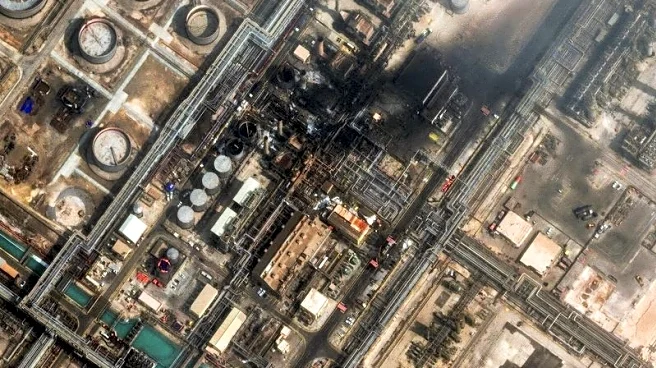
Oil prices have dropped significantly after President Trump indicated that the conflict with Iran might be nearing an end. This announcement reversed an earlier rally that had pushed crude prices above $100 per barrel due to disruptions in the Middle
East supply chain. The near-closure of the Strait of Hormuz, a vital oil transit route, had previously caused several Persian Gulf producers to curtail output. The market has been highly volatile, with traders trying to assess the conflict's duration and its impact on global oil supply. Despite the price drop, tanker traffic through the Strait remains limited.
Why It's Important?
The potential resolution of the U.S.-Iran conflict could stabilize global oil markets, reducing the economic uncertainty caused by fluctuating oil prices. A decrease in oil prices would alleviate pressure on consumers and businesses facing higher fuel costs. However, the situation highlights the fragility of global supply chains and the significant impact geopolitical tensions can have on energy markets. The conflict has also prompted discussions about the need for strategic petroleum reserves and alternative energy sources to mitigate future disruptions.
What's Next?
If the conflict ends, attention will shift to how quickly oil production and exports can resume normal levels. Governments may continue to consider releasing strategic reserves to stabilize markets. The situation also presents an opportunity for diplomatic engagement to prevent future conflicts and ensure the security of critical shipping routes. Long-term strategies may involve increasing investments in renewable energy and enhancing energy security to reduce reliance on geopolitically sensitive regions.