





What's Happening?
Italy's Senate has passed a law, with 81 votes to 51, that will allow the country to reintroduce nuclear power after a nearly 40-year hiatus. This legislative action grants the government 12 months to issue decrees concerning licensing, safety protocols,
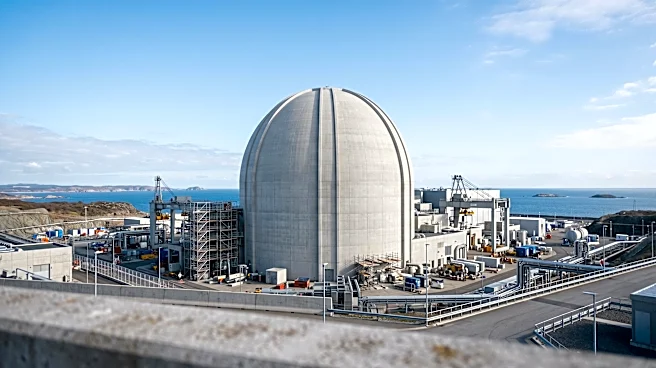
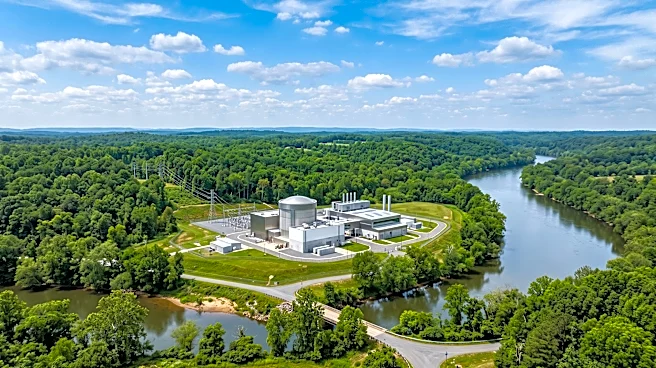
spent fuel management, radioactive waste disposal, and site selection. An additional two years will be provided for any necessary corrections. The new framework does not specify a particular technology but is expected to include small modular reactors (SMRs), microreactors, and fusion technology. The national energy and climate plan aims for 8 to 16 gigawatts (GW) of nuclear capacity to be operational by 2050, which could fulfill 11-22% of Italy's total electricity demand. This move marks a significant shift from Italy's previous stance, which saw the closure of all nuclear plants by 1990 following a public referendum in 1987, largely influenced by safety concerns after the Chernobyl incident in 1986.
Why It's Important?
This decision by Italy's government is a notable development in the global energy landscape, particularly for European energy security and climate goals. By re-embracing nuclear power, Italy aims to reduce its dependence on foreign energy sources and mitigate exposure to international crises that have historically impacted energy bills. The integration of nuclear energy, alongside renewables, is seen as a strategy to achieve energy security and move towards carbon neutrality by 2050. The reintroduction of nuclear power could stimulate significant investment in the sector, with Industrial Info Resources data indicating 66 SMR projects in Europe alone, valued at nearly $200 billion. This shift could also influence other European nations considering their own nuclear energy policies, potentially fostering a broader resurgence of nuclear power as a component of a diversified energy mix to combat climate change and ensure stable electricity supply.
What's Next?
Following the Senate's approval, the Italian government will now proceed with issuing decrees on various aspects of nuclear power implementation within the next 12 months, with an additional two years for adjustments. Environment and Energy Security Minister Gilberto Pichetto Fratin anticipates the first reactor could be operational by 2033 or 2034. Companies like Edison, in collaboration with EDF and Nuward, are already developing third-generation European nuclear power plants based on SMR technology, with a goal for initial operations by 2035. Ansaldo Nucleare, Italy's primary civil nuclear engineering firm, has also been working with Nuward. The focus will be on developing and deploying SMRs and other advanced nuclear technologies. The success of Italy's re-entry into nuclear power could serve as a model or cautionary tale for other nations contemplating similar energy transitions.
Beyond the Headlines
The return of nuclear power in Italy carries deeper implications beyond immediate energy security. It signifies a potential re-evaluation of public perception and policy regarding nuclear energy, which has historically been met with strong opposition in the country. The government's emphasis on 'new, sustainable nuclear power' and its integration with renewables suggests a strategic shift towards a more diversified and resilient energy infrastructure. This move could also reignite debates about the long-term storage of nuclear waste and the safety protocols required for advanced reactor technologies. Furthermore, it highlights a broader trend among some European nations to reconsider nuclear power as a viable solution for decarbonization and energy independence, potentially challenging the anti-nuclear sentiment that has prevailed in parts of the continent since the Chernobyl and Fukushima incidents.