




What's Happening?
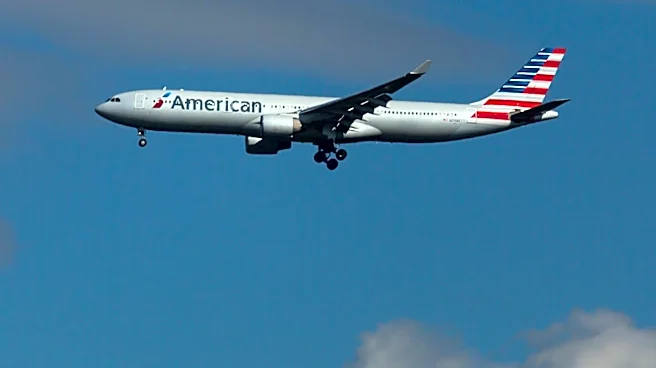
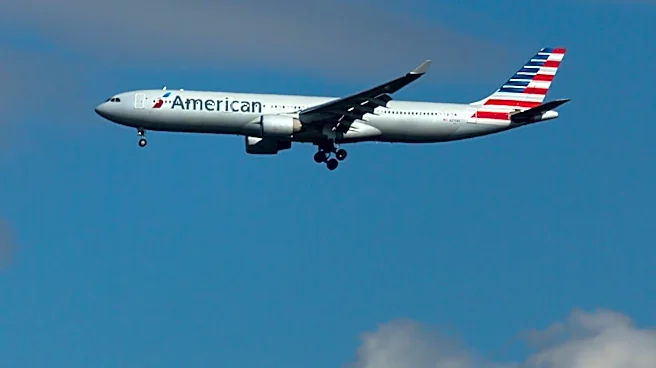
Arthur Lundeen, a man from Arizona accused of a racist outburst on an American Airlines flight bound for Newark Airport, has been fired from his job as a real estate agent with Long Realty in Tucson. The incident occurred on American Airlines Flight 618,
which departed from Dallas. Lundeen reportedly became disruptive, shouting racial and homophobic slurs, and became physical, leading passengers and flight attendants to restrain him with duct tape. Two New Jersey men, Richard O'Lenick and Juan Mejia (a former police officer), assisted in restraining Lundeen. The flight was diverted, and Lundeen was arrested in Maryland, facing charges of disorderly conduct and assault. Long Realty issued a statement confirming they had ended their affiliation with Lundeen, stating he is no longer authorized to represent the company.
Why It's Important?
This incident highlights the severe consequences individuals face for disruptive and discriminatory behavior on commercial flights, particularly when it involves racist and homophobic slurs. The immediate termination of Lundeen's employment by Long Realty underscores the increasing intolerance for such conduct, reflecting a broader societal expectation for accountability, especially from professionals. The involvement of fellow passengers in restraining the individual, and the use of unconventional methods like duct tape, brings to light the challenges flight crews and passengers face in managing unruly behavior at 30,000 feet. This event also serves as a stark reminder of the legal ramifications, with Lundeen facing criminal charges, and the potential for significant personal and professional repercussions that extend beyond the immediate incident. The airline's statement emphasizing passenger and team member safety reinforces the industry's commitment to maintaining a secure environment, even when confronted with extreme situations.
What's Next?
Arthur Lundeen will face legal proceedings in Maryland on charges of disorderly conduct and assault. The outcome of these legal actions could include fines, probation, or imprisonment, depending on the severity of the charges and the court's decision. The airline, American Airlines, may also pursue civil action against Lundeen for the disruption caused, including the costs associated with the flight diversion. This incident could prompt further discussions within the airline industry regarding protocols for handling unruly passengers, particularly those exhibiting discriminatory behavior. There may also be increased public awareness campaigns about passenger conduct and the legal consequences of such actions. The case could also influence corporate policies regarding employee conduct outside of work, especially when such actions become public and reflect negatively on the employer. The two New Jersey men who assisted in restraining Lundeen may be recognized for their actions, potentially sparking conversations about civilian intervention in emergency situations.
Beyond the Headlines
This incident transcends a simple case of an unruly passenger; it delves into the broader societal issues of racism, homophobia, and the boundaries of acceptable public behavior. The fact that such an outburst occurred on a commercial flight, a confined and often stressful environment, underscores the pervasive nature of these prejudices. The swift and decisive action by Long Realty to terminate Lundeen's employment reflects a growing corporate responsibility to disassociate from individuals whose actions contradict their values, even if those actions occur outside of the workplace. This case also highlights the psychological impact of such incidents on fellow passengers and flight crew, who are subjected to verbal abuse and potential physical threats. It prompts a deeper examination of how society addresses and mitigates hate speech and discriminatory behavior in public spaces, and the role of ordinary citizens in confronting such acts. The use of duct tape, while unusual, symbolizes the desperate measures sometimes required to ensure safety in extreme circumstances, raising questions about the adequacy of current in-flight restraint protocols.