
What's Happening?
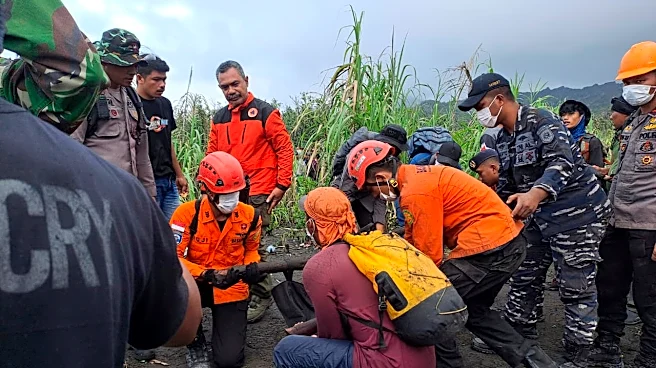
Rescuers on Indonesia's Halmahera Island have concluded a search operation following the eruption of Mount Dukono, which resulted in the deaths of three hikers, including two Singaporean nationals. The
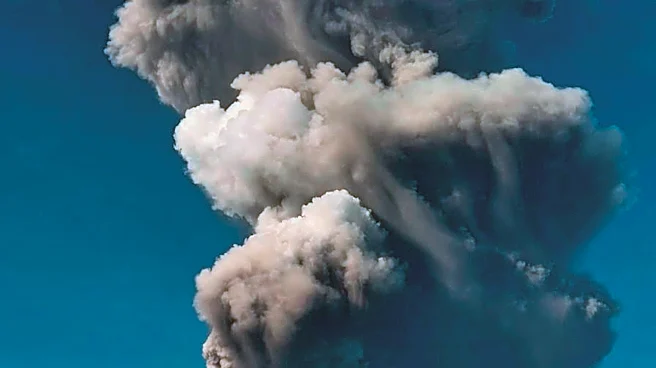
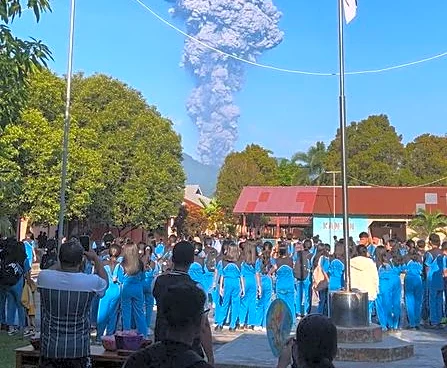
eruption, which began on Friday, sent ash plumes as high as six miles into the air, creating hazardous conditions around the volcano's crater. The bodies of the two Singaporeans were found under rock debris near the crater rim, while the body of an Indonesian hiker was discovered earlier. The search operation involved around 150 personnel and was complicated by the steep terrain, persistent rainfall, and ongoing volcanic activity. The bodies have been transported to Tobelo Regional Hospital for identification and further handling.
Why It's Important?
The incident underscores the dangers posed by Indonesia's active volcanoes, particularly in remote areas where access is limited. Indonesia, located on the Pacific 'Ring of Fire,' is home to over 120 active volcanoes, making eruptions a regular hazard. The tragedy highlights the importance of adhering to safety regulations and exclusion zones, especially during periods of heightened volcanic activity. The event also serves as a reminder of the risks faced by tourists and hikers who venture into restricted areas despite warnings. The loss of life and the challenges faced by rescue teams emphasize the need for improved safety measures and emergency response strategies in such volatile regions.
What's Next?
With the search operation now closed, authorities have urged residents, tourists, and tour operators to comply with safety regulations and avoid restricted areas around Mount Dukono. The Indonesian volcanology agency continues to monitor the volcano, maintaining a high alert level and banning activities within a 2.5-mile radius of the crater. The surviving Singaporeans are scheduled to return home, while arrangements for the repatriation of the deceased are pending. The incident may prompt a review of safety protocols and emergency preparedness measures for future volcanic eruptions in the region.