







What's Happening?
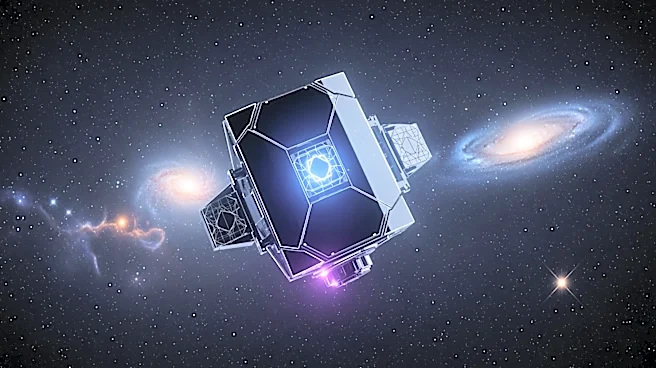
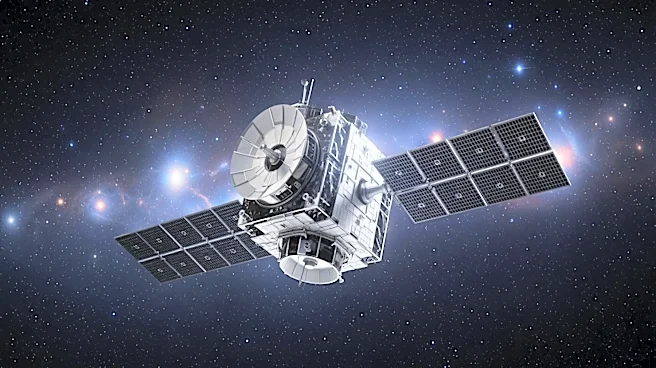
NASA is developing the Habitable Worlds Observatory (HWO), a new space telescope designed to directly image Earth-like planets around nearby stars and analyze their atmospheres for signs of life. The mission, still in its design phase, focuses on achieving
the necessary spectral resolution to detect biosignatures such as molecular oxygen and ozone. The telescope aims to distinguish between inhabited and barren planets by analyzing atmospheric compositions, a task that requires precise engineering and design choices.
Why It's Important?
The HWO represents a significant step forward in the search for extraterrestrial life. By directly imaging exoplanets and analyzing their atmospheres, the observatory could identify planets with conditions similar to Earth, potentially hosting life. This mission could transform our understanding of the universe and our place within it, offering the possibility of discovering life beyond our solar system. The success of HWO could also drive technological advancements in space observation and inspire future missions.
What's Next?
As the design phase progresses, engineers will focus on achieving the required spectral resolution and minimizing detector noise. The mission's success depends on overcoming these technical challenges to ensure accurate detection of biosignatures. Once operational, the HWO will prioritize observing nearby star systems, potentially identifying candidates for further study by future missions.