




What's Happening?
A new report by the Climate Impact Lab projects that Nigeria could experience an additional 31,400 heat-related deaths between September 2026 and February 2027 due to an intensifying El Niño weather pattern. This figure represents nearly half of the 66,800
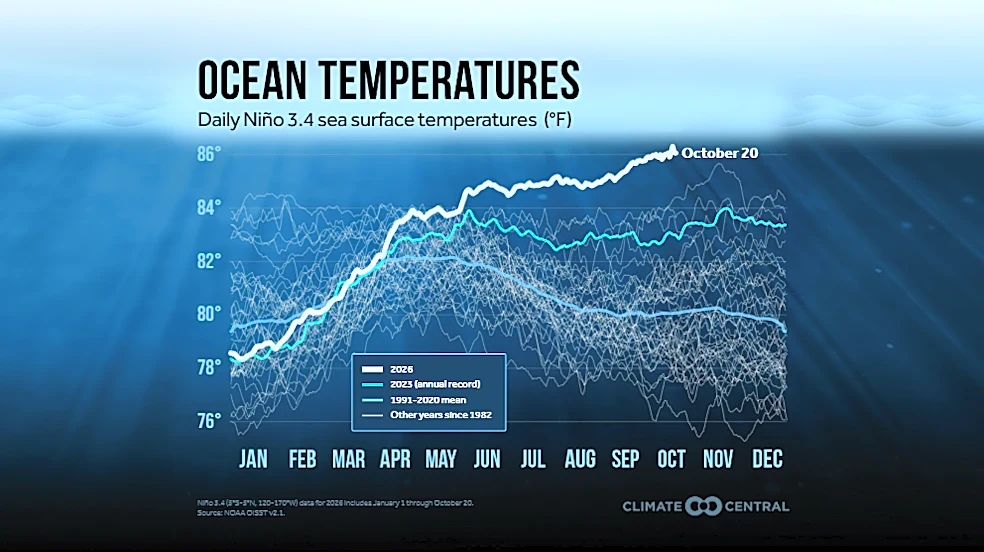
additional heat-related deaths projected across the entire Sahel region during the same period. Globally, the report, titled '451,000 at Risk: Where Action Can Save Lives During the Super El Niño,' estimates 451,000 additional heat-related deaths worldwide between June 2026 and February 2027 compared to a normal year. Researchers anticipate global land temperatures could rise 1.2 degrees Celsius above normal, leading to 44% more extremely hot days. Michael Greenstone, a co-founder of the Climate Impact Lab, emphasized the human toll, stating these numbers represent individuals living their daily lives. The report also warns that these unusually high temperatures are a 'postcard from the future,' resembling conditions that climate change could make commonplace within two decades.
Why It's Important?
The projections from the Climate Impact Lab highlight a severe humanitarian crisis on the horizon, particularly for vulnerable populations in regions like the Sahel. The potential for tens of thousands of additional heat-related deaths underscores the urgent need for proactive measures from governments and humanitarian organizations. This situation is critical because it not only represents immediate loss of life but also serves as a stark warning about future climate change impacts. The report suggests that the extreme temperatures expected during this El Niño event are a preview of what could become normal in just a few decades, emphasizing the long-term implications of global warming. Identifying vulnerable populations and directing resources now could significantly reduce the projected mortality, making these projections a crucial tool for public health and disaster preparedness strategies.
What's Next?
The Climate Impact Lab's report provides a critical window for intervention, urging governments and humanitarian organizations to act swiftly. Recommended actions include implementing heat warnings, conducting health outreach to vulnerable individuals, establishing cooling centers and hydration stations, enforcing workplace protections, and increasing health system capacity. The report also stresses the importance of developing heat early-warning systems and action plans that enable health officials to monitor symptoms and improve access to water for at-risk residents. While emergency responses are necessary for the immediate crisis, experts like Tamma Carleton, a co-author, emphasize the need for long-term planning to prevent a constant state of emergency in the future. This involves mobilizing resources to design, deploy, and evaluate preparation tools that will save lives as temperatures continue to rise in the coming years.
Beyond the Headlines
The projected surge in heat-related deaths in the Sahel region, particularly in Nigeria, extends beyond immediate mortality figures to reveal deeper systemic vulnerabilities. This event underscores the disproportionate impact of climate change on regions with limited infrastructure and resources, highlighting issues of climate justice. The 'postcard from the future' analogy used in the report suggests that current extreme weather events are not anomalies but harbingers of a new climatic normal, demanding a fundamental shift in global climate policy and adaptation strategies. Ethically, the projections challenge the international community to consider its responsibility towards populations most affected by climate change, which often contribute the least to its causes. Legally, these events could prompt discussions around climate-induced migration and the rights of climate refugees, as communities may be forced to relocate due to uninhabitable conditions. Culturally, such widespread heat-related mortality could disrupt social structures, traditional livelihoods, and community resilience, leading to long-term societal shifts.