


What's Happening?
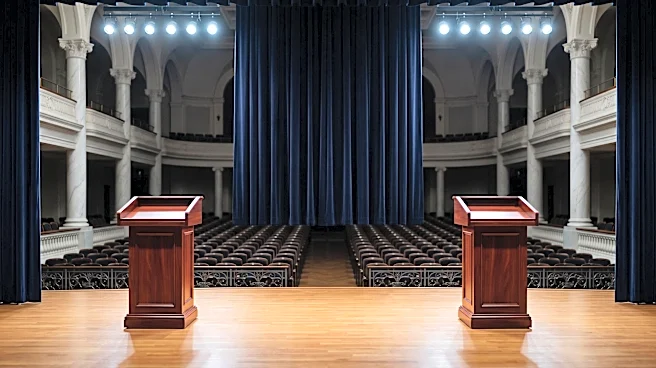
Candidates for the U.S. House of Representatives in New Jersey are increasingly opting out of debates hosted by the League of Women Voters. This trend is observed across both Republican and Democratic parties, with some GOP officials in Cape May County
even advising their candidates to avoid League events entirely. Jesse Burns, who heads the League in New Jersey, expressed concern over this development, noting a decline in candidate participation in both debates and voter guides. Election observers suggest that debate-dodging has become a more common campaign strategy in the social media era, particularly for incumbents and front-runners, who aim to avoid potential gaffes that could go viral and negatively impact their campaigns. This shift is attributed to the perceived low reward and high risk associated with unscripted public forums.
Why It's Important?
The growing reluctance of candidates to participate in public debates, especially those organized by nonpartisan groups like the League of Women Voters, has significant implications for voter engagement and informed decision-making in U.S. elections. Debates traditionally serve as a crucial platform for citizens to directly engage with candidates, understand their policy positions, and compare them against opponents. When candidates avoid these forums, voters may have fewer opportunities to access unfiltered information, leading to a greater reliance on carefully curated campaign messaging and partisan media. This trend could contribute to a less informed electorate, increased political polarization, and a decline in accountability for elected officials, as candidates face less direct scrutiny of their views and qualifications.
What's Next?
The trend of candidates skipping debates is likely to continue, especially as campaigns increasingly prioritize controlled messaging through social media and other digital platforms. This could lead to a further decline in the public's access to direct, unscripted interactions with candidates. Organizations like the League of Women Voters may need to adapt their strategies to encourage candidate participation or explore alternative methods for informing voters. Political observers suggest that voters should pay attention when candidates avoid debates, as it can be perceived as a lack of accountability. The long-term impact could be a more disengaged electorate and a political landscape where substantive policy discussions are overshadowed by soundbites and partisan narratives.
Beyond the Headlines
The decline in candidate debate participation reflects a broader transformation in political communication and voter behavior. In an era dominated by social media and fragmented news consumption, the traditional role of debates as central civic events is diminishing. This shift can exacerbate political polarization, as voters increasingly rely on partisan cues rather than engaging with diverse viewpoints. The emphasis on avoiding 'gotcha moments' in debates suggests a political culture where risk aversion often trumps transparency and direct engagement. This trend raises fundamental questions about the health of democratic discourse, the role of media in shaping public opinion, and the mechanisms through which citizens can hold their representatives accountable in an increasingly digital and polarized environment.