


What's Happening?
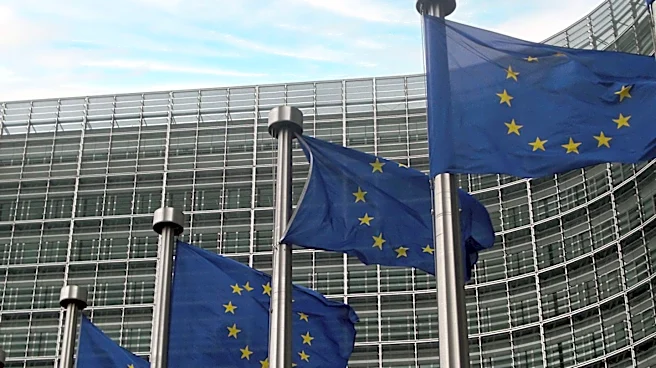
The European Union is preparing to implement its most extensive sanctions against Russia since the start of the conflict in Ukraine. Kaja Kallas, the EU's foreign policy chief, announced that these new measures are designed to further cripple Russia's
war machine, which has already incurred over 1 trillion euros ($1.16 trillion) in costs due due to existing sanctions. The upcoming sanctions, once adopted, are expected to increase the total number of sanctioned Russian entities by one-third. While specific details and timing were not fully disclosed by Kallas, diplomatic sources within the EU later indicated that the European External Action Service (EEAS) plans to propose targeting approximately 1,600 Russian individuals and entities. These targets are primarily linked to Russia's military-industrial complex. The proposed designations will include travel and transaction bans, as well as asset freezes. The EU has previously sanctioned nearly 3,000 individuals and companies in response to the ongoing conflict.
Why It's Important?
These expanded sanctions signify a continued and intensified effort by the European Union to exert economic pressure on Russia, aiming to undermine its capacity to sustain military operations in Ukraine. The substantial financial impact already cited by Kallas—over 1 trillion euros—highlights the significant economic strain these measures are intended to inflict. By targeting an additional 1,600 individuals and entities, particularly those within the military-industrial complex, the EU seeks to disrupt the supply chains, funding, and operational capabilities essential for Russia's war efforts. This move could further isolate Russia from global financial systems and restrict its access to critical technologies and resources. The cumulative effect of these sanctions is intended to increase the cost of the conflict for Russia, potentially influencing its strategic decisions and ultimately contributing to an end to the war. The broad scope of these sanctions also underscores the EU's commitment to a unified and robust response to the conflict, potentially setting a precedent for future international responses to similar geopolitical events.
What's Next?
The European External Action Service (EEAS) is expected to formally propose the new listings in September, focusing on individuals and entities accused of human rights violations, particularly those involved in trafficking Ukrainian children. Later in the fall, further designations are anticipated to target those engaged in Russia's hybrid warfare activities, including cyberattacks and misinformation campaigns. Once proposed, these sanctions will undergo a process of adoption by EU member states. The implementation of these measures will likely lead to immediate travel and transaction bans, as well as asset freezes for the newly designated individuals and entities. Russia's response to these escalating sanctions remains to be seen, but it could involve retaliatory measures or further efforts to circumvent the restrictions. The EU's continued pressure aims to compel Moscow to cease its military actions in Ukraine, and the effectiveness of these new sanctions will be closely monitored by international observers and policymakers.
Beyond the Headlines
The EU's strategy of progressively expanding sanctions against Russia reflects a broader shift in international relations, where economic tools are increasingly employed as primary instruments of foreign policy. This approach raises questions about the long-term efficacy of sanctions in altering state behavior, particularly in the context of a protracted conflict. While the immediate goal is to weaken Russia's military and economic capabilities, the cumulative impact could also lead to a more entrenched and isolated Russian economy, potentially fostering self-sufficiency in certain sectors. Furthermore, the focus on human rights violations and hybrid warfare activities in future sanction rounds indicates an evolving understanding of the multifaceted nature of modern conflict, extending beyond conventional military engagements. The ongoing sanctions regime also highlights the complex interplay between economic interdependence and geopolitical rivalry, forcing nations to re-evaluate their trade relationships and supply chain vulnerabilities in an increasingly fragmented global landscape.