



What's Happening?
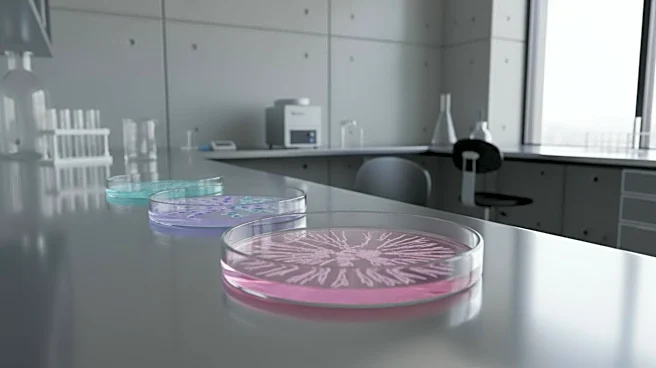
Researchers at the University of Minnesota have developed a simplified artificial cell system that can enclose genetic material within a membrane and undergo a few rounds of division. This system, led by Kate Adamala, is designed to import new materials
and spontaneously divide, producing several generations of 'offspring' before the process fails. The artificial cells, termed 'SpudCells,' incorporate biological systems from viruses, which are known for their minimalistic versions of cellular processes. The system uses a viral mechanism to replicate DNA within the membrane, allowing the artificial cells to mimic some aspects of living cells. Although the system is heavily reliant on human intervention, it represents a significant step in understanding the origin of life and the potential for creating minimalistic life forms.
Why It's Important?
This development is crucial for advancing the understanding of how life might have originated on Earth. By creating a system that can mimic some functions of living cells, researchers can explore fundamental questions about the transition from non-living to living matter. The ability to enclose genetic material and facilitate division in a controlled environment could lead to breakthroughs in synthetic biology, potentially enabling the creation of new life forms or the development of novel biotechnologies. This research could also provide insights into the minimal requirements for life, which has implications for the search for life beyond Earth and the development of life-supporting technologies.
What's Next?
The research team plans to refine the artificial cell system to improve its stability and functionality. Future work may focus on reducing the dependency on human intervention and increasing the number of successful cell divisions. The team may also explore the integration of additional biological systems to enhance the capabilities of the SpudCells. As the research progresses, it could attract interest from the broader scientific community, potentially leading to collaborations aimed at further understanding the origins of life and the development of synthetic life forms.
Beyond the Headlines
The ethical implications of creating artificial life forms are significant and warrant careful consideration. As researchers develop systems that increasingly resemble living organisms, questions about the definition of life and the potential consequences of creating synthetic life must be addressed. This research also raises potential legal and regulatory challenges, as existing frameworks may not adequately cover the creation and use of artificial life forms. The long-term cultural impact of such developments could be profound, influencing how society perceives life and its origins.