





What's Happening?
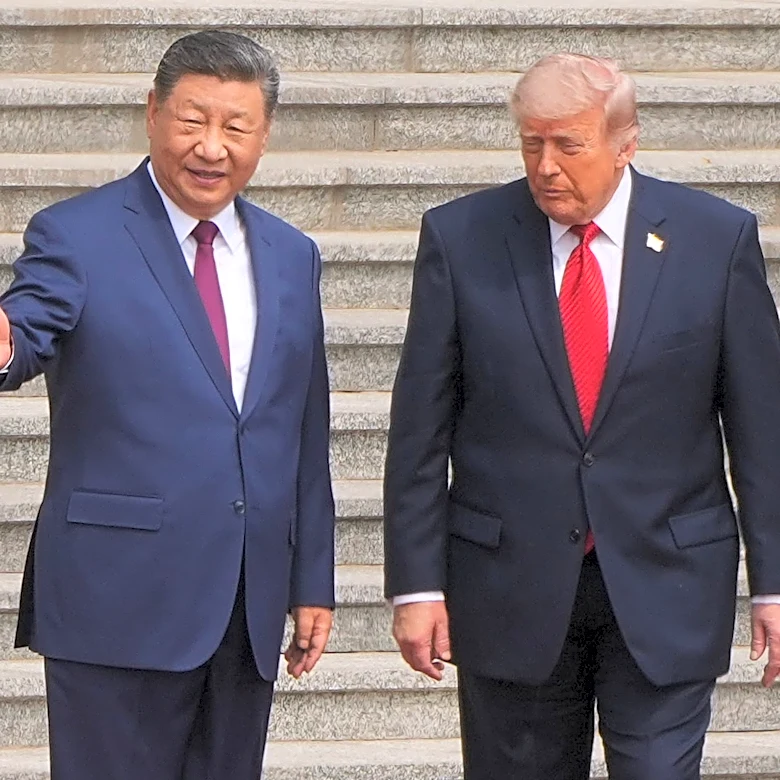
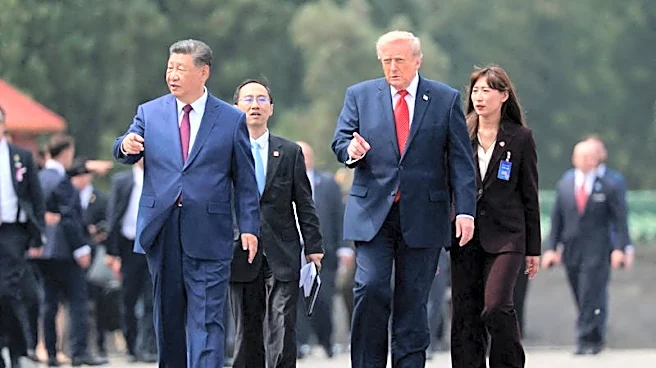
Nationalist leaders frequently utilize territorial disputes to project strength and garner patriotic support when facing internal political tensions. This pattern is evident in various global contexts, including Vladimir Putin's actions in Ukraine, President
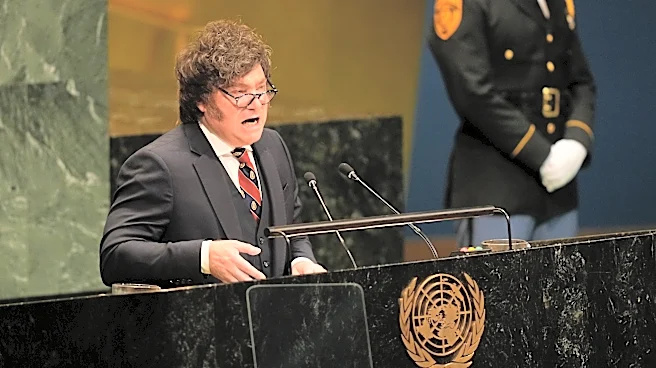
Trump's past interest in Greenland, and Xi Jinping's claims over Taiwan. In Argentina, presidents have historically invoked the Malvinas (Falkland Islands) dispute as a source of national unity, particularly during periods of domestic instability. Recently, Argentine President Javier Milei, despite initially cautioning against mixing football and politics regarding the Malvinas, later adopted a strong stance on the issue. He declared the Malvinas as Argentine 'by history and rights,' announced plans to sanction foreign companies involved in oil exploration around the islands, and proposed measures to strengthen Argentina's sovereignty defense. This shift occurred as his approval ratings declined amidst economic challenges, including rising unemployment and weakened real wages, despite a significant drop in inflation.
Why It's Important?
The strategic use of territorial disputes by nationalist leaders has significant implications for international relations and domestic stability. For the U.S., such actions can contribute to global instability, particularly when they involve key geopolitical regions like Taiwan, which is central to U.S. foreign policy and economic interests due to its role in global technology supply chains. The U.S. often finds itself navigating complex diplomatic challenges when allies or adversaries engage in such tactics. Domestically, this approach can divert public attention from internal issues, consolidate power, and rally support, but it also carries the risk of escalating conflicts. The Argentine example highlights how leaders can leverage historical grievances and national identity to unify a populace, even if temporarily, against a perceived external threat, impacting economic policies and international partnerships. The potential for resource-rich territories, like the Malvinas with its oil reserves, to become flashpoints further complicates international energy markets and diplomatic efforts.
What's Next?
President Milei's intensified stance on the Malvinas dispute, including plans to sanction foreign companies involved in oil exploration, suggests a potential escalation of tensions with the United Kingdom. The planned Sea Lion oil project, operated by British company Rockhopper and Israel's Navitas Petroleum, could begin production as early as 2028, transforming the historical territorial dispute into an immediate conflict over natural resources. This could lead to increased diplomatic pressure, potential legal challenges, and economic repercussions for the involved companies and nations. Milei's actions are also likely tied to his bid for re-election in 2027, indicating that the Malvinas issue will remain a prominent feature of his political platform. The international community, including the U.S., will likely monitor these developments closely, as they could set precedents for how territorial claims are handled in resource-rich areas and impact global energy security.
Beyond the Headlines
The phenomenon of nationalist leaders using territorial disputes to manage domestic political tensions reveals deeper insights into the interplay between national identity, historical narratives, and political expediency. The Malvinas dispute, for instance, transcends mere territorial claims; it has become a powerful symbol encompassing Argentine sovereignty, resistance to colonialism, and the memory of those who fought in the 1982 war. This emotional resonance allows leaders to tap into a collective sense of patriotism, even when their economic policies are unpopular. The ethical dimension arises from the manipulation of national sentiment for political gain, potentially at the cost of international stability and rational policy-making. Culturally, these disputes reinforce specific historical interpretations and national myths, shaping public discourse and identity for generations. The long-term shift could be a normalization of such tactics, where territorial claims become a standard tool in a leader's domestic political arsenal, potentially leading to a more volatile international landscape.