





What's Happening?
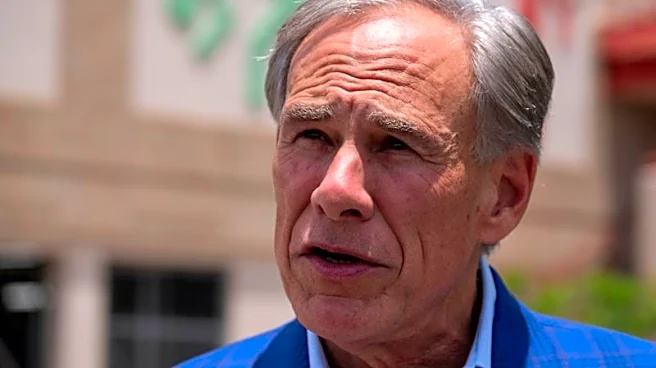
Minnesota Attorney General Keith Ellison has filed a federal lawsuit against Texas Governor Greg Abbott to compel the extradition of U.S. Immigration and Customs Enforcement (ICE) agent Christian Castro. Castro is accused of firing a gun into an occupied
Minneapolis home on January 14, striking a Venezuelan man, Julio Sosa-Celis, in the leg, and then falsely reporting the incident. Surveillance footage reportedly contradicts Castro's account that he was attacked with a broom and shovel. Castro was charged in May with four counts of second-degree assault and one count of falsely reporting a crime. He was arrested by Texas Rangers on May 29 and has been held in Cameron County Jail. Minnesota officials state that Governor Abbott has withheld a rendition warrant necessary for Castro's transfer, despite federal law requiring states to cooperate on extradition requests. Minnesota is facing a deadline, as Texas law dictates that an individual awaiting extradition cannot be held for more than 90 days, and Castro has been in custody for 81 days.
Why It's Important?
This legal battle highlights a significant interstate conflict over law enforcement accountability and immigration policy. Governor Abbott's refusal to extradite Castro, despite Minnesota's repeated requests and the legal obligation for states to cooperate on such matters, could set a precedent for how states handle federal agents accused of crimes. The situation underscores the growing tensions between 'blue' and 'red' states regarding the conduct of federal immigration enforcement, particularly in the context of aggressive immigration operations like 'Operation Metro Surge.' If Texas succeeds in preventing Castro's extradition, it could embolden other states to resist similar requests, potentially undermining the interstate extradition system and creating safe havens for individuals accused of crimes. The case also brings to light the broader debate about the oversight and accountability of federal agents, especially when their actions lead to civilian injuries or deaths.
What's Next?
Minnesota Attorney General Keith Ellison is seeking a federal court order to declare Governor Abbott's withholding of the rendition warrant unconstitutional and unlawful. Additionally, Ellison's office plans to request a temporary restraining order to prevent the Cameron County Sheriff's Office from releasing Castro before he can be transferred to Minnesota. The lawsuit aims to ensure Castro faces trial in Minnesota, where the alleged crime occurred. Governor Abbott has publicly dismissed Minnesota's demands, linking his refusal to a separate issue of alleged welfare fraud in Minnesota. The Department of Homeland Security has stated that Castro is on administrative leave and that the U.S. Attorney's Office is investigating false statements made by agents involved in the incident. The outcome of this lawsuit will determine whether Castro is extradited to Minnesota to face charges or if he is released under Texas law.
Beyond the Headlines
This case extends beyond a simple extradition dispute, touching upon fundamental questions of federalism, state sovereignty, and the rule of law. Governor Abbott's stance, linking the extradition to unrelated allegations of welfare fraud in Minnesota, introduces a political dimension that could further complicate interstate relations. The incident also raises ethical concerns about the conduct of federal agents during immigration operations and the transparency of investigations into their actions. The fact that video evidence reportedly contradicts Castro's initial report of the incident underscores the importance of independent oversight and accountability for law enforcement. The broader implications could include a re-evaluation of extradition protocols between states, potentially leading to legislative changes or further legal challenges that define the boundaries of gubernatorial discretion in such matters. This situation could also intensify the national conversation around immigration enforcement tactics and the rights of individuals impacted by them.