

What's Happening?
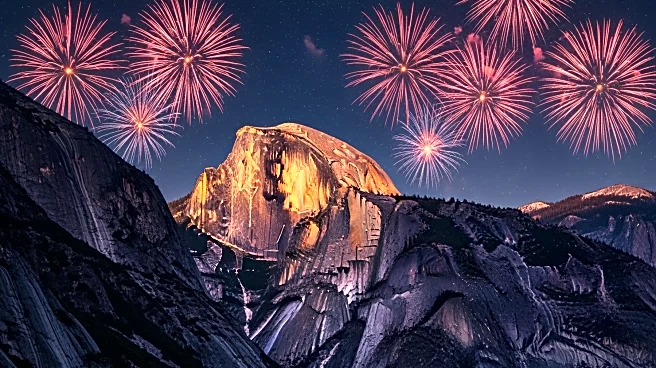
The National Parks Service (NPS) has approved a fireworks display at Mount Rushmore for America's 250th birthday celebration, reversing previous denials due to environmental concerns. The event, scheduled for July 3, will include educational programs,
patriotic tributes, and musical entertainment. South Dakota Governor Larry Rhoden invited President Trump to the celebration, describing it as the 'biggest birthday party ever.' The decision marks a shift from the prior administration's stance, which had banned fireworks at the site due to the potential environmental impact, specifically citing elevated perchlorate levels in groundwater and surface water. The last fireworks display at Mount Rushmore occurred in 2020, hosted by then-Governor Kristi Noem and President Trump.
Why It's Important?
The approval of fireworks at Mount Rushmore for the 250th Independence Day celebration is significant as it highlights a change in federal policy regarding environmental concerns at national parks. This decision may set a precedent for future events at protected sites, balancing environmental protection with cultural and historical celebrations. The event is expected to draw significant public attention and participation, potentially boosting tourism and local economies. However, it also raises questions about the long-term environmental impact and the management of national park resources. Stakeholders, including environmental groups and local communities, may have differing views on the implications of this decision.
What's Next?
As the event approaches, preparations will likely involve coordination between federal, state, and local agencies to ensure safety and minimize environmental impact. The NPS will need to monitor the site for any potential environmental damage post-event. Public interest in attending the celebration is expected to be high, with a lottery system in place for ticket distribution. The event may also prompt discussions on the balance between environmental conservation and cultural celebrations at national landmarks, influencing future policy decisions.