









What's Happening?
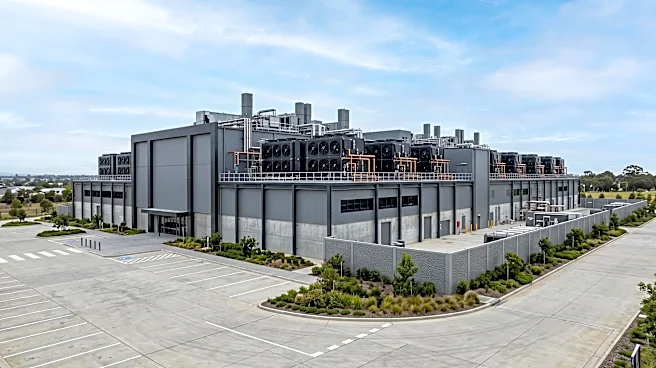
Actor Sam Heughan, known for his role in 'Outlander,' has publicly voiced his opposition to plans for building a large data center at the former Chapelcross nuclear site in the south of Scotland. Heughan, who grew up in Galloway, questioned the financial
benefits such a project would bring to Scotland, particularly regarding job creation. He argued that the actual number of jobs after the construction phase would be minimal. CX Tech Ltd, the company behind the plans, claims the project could create over 500 full-time positions and represents a significant investment of £15.6 billion, calling it a 'once-in-a-generation opportunity.' Heughan also raised concerns about the environmental impact on the landscape and local wildlife, advocating for more legislation and consideration before proceeding. He highlighted that large-scale data centers are primarily built by U.S. tech giants, suggesting that the financial benefits would largely return to them.
Why It's Important?
This situation highlights a growing tension between economic development initiatives and environmental preservation, particularly in regions with significant natural beauty and tourism appeal. While the proposed data center promises substantial investment and job creation, concerns about the long-term environmental impact and the actual distribution of economic benefits are significant. The involvement of U.S. tech giants in financing and benefiting from such projects in other countries raises questions about global economic equity and the potential for local communities to be overlooked in favor of large corporate interests. For the U.S., this reflects a broader trend of its tech companies expanding infrastructure globally, which can lead to both economic opportunities and environmental debates in host nations. The debate also underscores the increasing demand for data infrastructure and the associated environmental footprint, prompting calls for more sustainable and equitable development practices.
What's Next?
The plans for the data center at Chapelcross were lodged recently and have already generated considerable opposition. Dumfries and Galloway Council has confirmed that due to the 'significant volume' of representations received, they will not publish them online in the usual manner, instead opting to publish the number of representations and a summary of the grounds. CX Tech hopes to begin work on the project next year, with an estimated completion time of eight years. The Scottish government has rejected a call from the Scottish Greens to pause application processes for data centers but has committed to publishing new national guidelines by Christmas, with no planning decisions expected before then. This indicates a period of review and potential policy adjustments that could influence the future of this and similar projects across Scotland.
Beyond the Headlines
The controversy surrounding the Chapelcross data center project extends beyond immediate economic and environmental concerns, touching upon broader themes of national sovereignty and the impact of globalized technology infrastructure. Heughan's point about U.S. tech giants being the primary beneficiaries of these large-scale data centers raises questions about who truly profits from such developments and whether host countries receive equitable returns. The debate also highlights the cultural value placed on natural landscapes and the tourism industry, which Heughan noted has seen a 'huge rise' due to 'Outlander's' portrayal of Scotland's scenery. This suggests a conflict between different visions for Scotland's future: one focused on industrial and technological growth, and another prioritizing environmental protection and cultural heritage. The outcome of this specific project could set a precedent for how Scotland, and potentially other nations, balance these competing interests in the face of increasing demand for digital infrastructure.