




What's Happening?
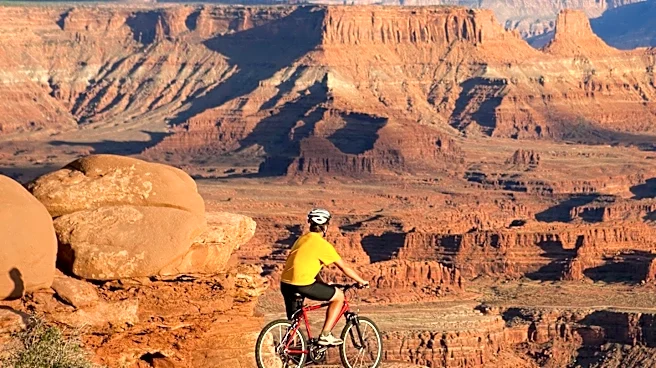
A challenging bikepacking route, known as 'Beef, Needles, and Elephants,' is available in the Needles District of Canyonlands National Park, Utah. This route, less traveled than the White Rim Trail, features colorful sandstone spires, slot canyons, and ancient
Pueblo-style structures. The journey involves rough doubletrack, sandy sections, and requires pushing bikes at times. It passes through Beef Basin, an area known for its historical remnants, and offers views of the Six Shooter Peaks. The route's highest point is approximately 8,200 feet, providing expansive views of the surrounding forest and rock formations. A notable side trip leads to Chesler Park Viewpoint, offering a prime view of the Needles, and another to Confluence Overlook, where the Green and Colorado Rivers meet. The Elephant Hill Trail, known for its steep slickrock climbs and rocky obstacles, presents a final challenge. The ideal times to undertake this route are spring (April-May) and fall (mid-September-October) due to extreme summer temperatures.
Why It's Important?
This bikepacking route highlights the diverse recreational opportunities within U.S. national parks, catering to adventure tourism and outdoor enthusiasts seeking challenging experiences. The preservation of ancient ruins along the route underscores the importance of protecting cultural heritage sites within natural landscapes, offering visitors a unique blend of historical and environmental exploration. The route's remote nature and lack of resupply points emphasize the need for self-sufficiency and preparedness in wilderness areas, promoting responsible outdoor recreation. By drawing attention to lesser-known areas like the Needles District, it helps distribute visitor impact, potentially alleviating pressure on more popular park sections. The physical demands of the route, including pushing bikes and navigating rough terrain, contribute to the growing trend of extreme sports and endurance activities in the U.S., attracting a specific demographic of adventurers and contributing to local economies through specialized gear sales and related services.
What's Next?
Individuals planning to undertake the 'Beef, Needles, and Elephants' route will need to secure necessary permits, particularly for the Elephant Hill Trail, which requires a free permit obtainable at the Needles Visitor Center. Campgrounds within the national park require advance booking. Visitors must also plan for complete self-sufficiency, carrying all food and water, as there are no resupply points along the route. Given the remote nature and lack of cell service, proper navigation equipment and emergency preparedness are crucial. Future engagement with this route may involve continued efforts by organizations like BIKEPACKING.com to gather community feedback for route improvements, advocating for trail maintenance, and promoting conservation initiatives. The ongoing popularity of bikepacking and adventure tourism could lead to increased interest in such challenging routes, potentially prompting park authorities to further develop visitor resources while maintaining the wilderness character of the area.
Beyond the Headlines
The 'Beef, Needles, and Elephants' route in Canyonlands National Park represents more than just a physical challenge; it offers a profound connection to the natural and historical tapestry of the American West. The presence of ancient Pueblo-style structures and cliff dwellings along the route invites reflection on the long history of human interaction with this landscape, predating modern recreational uses. This blend of natural beauty and archaeological significance raises ethical considerations regarding visitor conduct and the preservation of fragile historical sites. The route's emphasis on self-reliance in a remote, unforgiving environment fosters a deeper appreciation for wilderness and the skills required to navigate it safely. Furthermore, the unique geological formations, shaped by millions of years of erosion, serve as a powerful reminder of the Earth's dynamic processes and the vastness of geological time, offering a perspective that transcends daily concerns and encourages environmental stewardship.