





What's Happening?
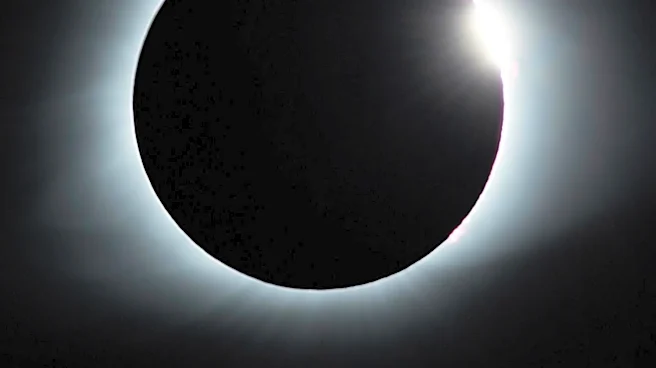
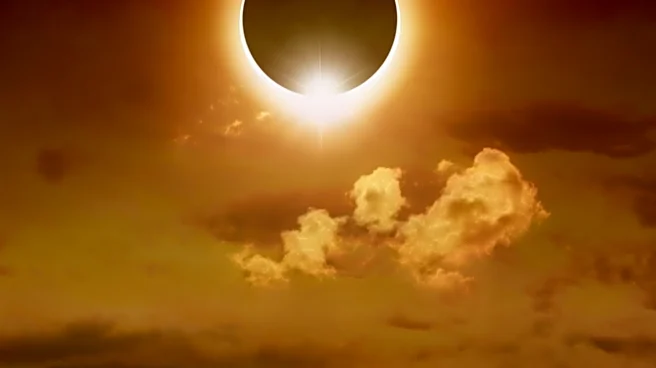
NASA has announced that a total solar eclipse will occur on August 12, 2026, visible across parts of the North Atlantic and Europe. The eclipse will bring a brief period of complete darkness to regions including eastern Greenland, western Iceland, northern
Spain, and a small corner of northeastern Portugal. While most of Europe, northern North America, and northwestern Africa will experience a partial eclipse, the event will not be visible from India. The duration of totality will vary, with most areas experiencing less than two minutes of complete coverage. During totality, the Sun's corona will be visible, and a drop in temperature may be felt. Safety guidelines emphasize the use of certified solar eclipse glasses to prevent eye damage.
Why It's Important?
The total solar eclipse presents a significant opportunity for scientific observation and public engagement with astronomy. It highlights the importance of understanding celestial events and their impact on Earth. The event will attract tourists and astronomy enthusiasts to the regions within the path of totality, potentially boosting local economies. Additionally, it serves as a reminder of the need for public awareness regarding eye safety during solar observations. The eclipse also provides a platform for educational initiatives, encouraging interest in science and space exploration.
What's Next?
As the date approaches, space agencies and local authorities will likely increase public outreach efforts to educate people about the eclipse and safety measures. Tourism sectors in the regions within the path of totality may prepare for an influx of visitors. Scientists and researchers will plan observations to study the Sun's corona and other phenomena. The event may also prompt discussions on the importance of space science and its role in understanding our universe.