






What's Happening?
The first meeting of the Conference of the Parties (COP-1) to the Agreement under the United Nations Convention on the Law of the Sea on the Conservation and Sustainable Use of Marine Biological Diversity of Areas beyond National Jurisdiction (BBNJ Agreement)
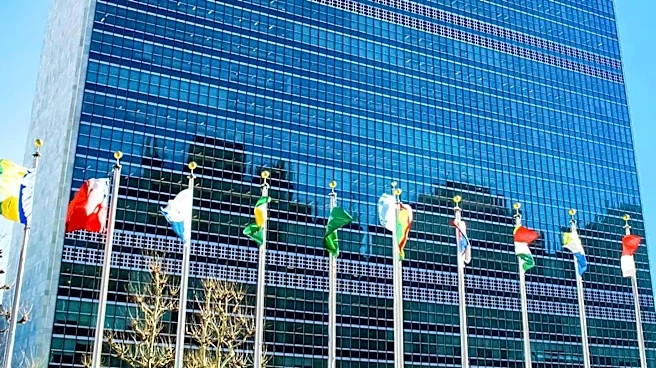
is scheduled to take place from January 11 to January 22, 2027. This significant event will be held at the UN Headquarters in New York. The BBNJ Agreement officially entered into force on January 17, 2026. The primary agenda for this inaugural meeting will involve addressing crucial institutional, procedural, and financial matters related to the implementation and operationalization of the agreement. This conference marks a pivotal step in global efforts to protect and sustainably manage marine biodiversity in areas outside national jurisdiction, often referred to as the high seas.
Why It's Important?
The BBNJ Agreement and its first COP meeting are critically important for the future of ocean governance and marine conservation. The high seas, which cover nearly two-thirds of the world's ocean, are vital for global ecological balance, climate regulation, and biodiversity, yet they have historically been less regulated than coastal waters. The agreement provides a much-needed legal framework to establish marine protected areas, conduct environmental impact assessments, and facilitate capacity building and the transfer of marine technology in these vast, shared spaces. The COP-1 meeting will lay the groundwork for how these provisions will be implemented, determining the operational mechanisms, financial resources, and procedural rules that will govern international cooperation in marine conservation. Its success is crucial for addressing growing threats to marine biodiversity, such as climate change, pollution, and overfishing, in areas beyond national jurisdiction.
What's Next?
The upcoming COP-1 meeting in January 2027 will focus on establishing the foundational elements for the BBNJ Agreement's effective operation. Key discussions will revolve around institutional structures, including the establishment of a secretariat and subsidiary bodies, as well as procedural rules for decision-making and participation. A critical aspect will be the development of financial mechanisms to support the agreement's implementation, particularly for developing countries. Decisions made at this meeting will directly influence the pace and scope of future conservation efforts in the high seas, including the designation of marine protected areas and the conduct of environmental impact assessments. The outcomes will also shape how scientific research and marine technology are shared among nations to enhance conservation capabilities. The meeting is expected to set the agenda for subsequent COPs, guiding the long-term trajectory of high seas governance.
Beyond the Headlines
The BBNJ Agreement and its inaugural COP represent a landmark achievement in international environmental law, signaling a collective recognition of the urgent need to protect the global ocean commons. Beyond the immediate procedural and financial discussions, this agreement has profound ethical and geopolitical implications. Ethically, it underscores a shared responsibility for the health of the planet's largest ecosystem, moving beyond national self-interest to embrace a global stewardship model. Geopolitically, it requires unprecedented levels of cooperation among diverse nations, potentially fostering new diplomatic pathways for addressing complex environmental challenges. The agreement also highlights the evolving nature of international law, adapting to address transboundary environmental issues that traditional legal frameworks struggled to manage. Its successful implementation could serve as a model for future international agreements tackling other global commons, such as outer space or the atmosphere, setting a precedent for collaborative governance in the face of shared planetary threats.