



What's Happening?
In 2018, the U.S. Air Force initiated a 35-year lease for underutilized desert land located at Edwards Air Force Base in California. This land, previously used for aircraft testing, has since been transformed into a significant clean energy facility.
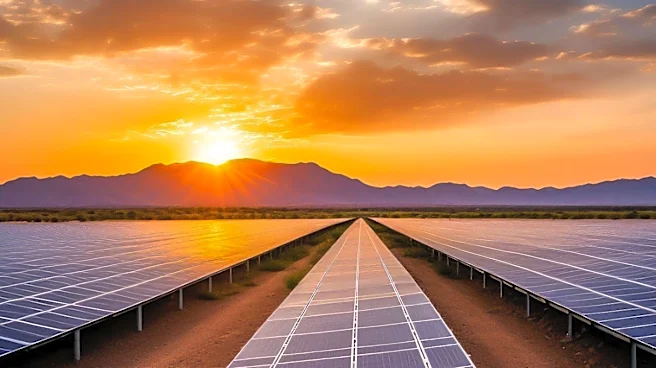
The Edwards Sanborn solar project now hosts nearly 1.9 million solar panels, generating a substantial amount of clean energy. This initiative repurposes federal land that was not being fully utilized, aligning with broader efforts to expand renewable energy infrastructure within the United States. The project demonstrates a strategic shift in how federal assets can contribute to national energy goals, converting barren landscapes into productive energy sources.
Why It's Important?
This project is important as it showcases a successful model for leveraging federal land for large-scale renewable energy development. The transformation of underused military property into a major solar farm contributes significantly to the nation's clean energy capacity, reducing reliance on fossil fuels and enhancing energy independence. It also sets a precedent for future collaborations between government entities and energy developers, potentially unlocking vast tracts of federal land for similar projects. The initiative supports job creation in the renewable energy sector and demonstrates a commitment to environmental sustainability, which can inspire other states and federal agencies to pursue similar ventures. Furthermore, it highlights the economic benefits of repurposing land, turning a previously unproductive asset into a source of clean power and economic activity.
What's Next?
The success of the Edwards Sanborn solar project could lead to the identification and development of similar renewable energy projects on other underutilized federal lands across the United States. This model may encourage the U.S. Air Force and other government agencies to explore further opportunities for long-term leases with clean energy developers. Future steps could involve policy adjustments to streamline the process for such leases, making it easier and faster to convert suitable federal properties into renewable energy sites. Additionally, the project's long-term operational data will be crucial in evaluating its economic and environmental impact, potentially influencing the design and scale of subsequent projects. This could also spur technological advancements in solar energy storage and transmission to maximize the efficiency of these large-scale installations.
Beyond the Headlines
The Edwards Sanborn solar project represents more than just an energy initiative; it signifies a broader shift in national resource management and environmental stewardship. By converting a former aircraft testing site into a clean energy hub, the project subtly redefines the utility of military lands, demonstrating their potential for dual-use purposes that benefit both national security and environmental goals. This development could foster a new paradigm where federal agencies actively seek out and implement sustainable practices, integrating environmental considerations into their core missions. It also raises questions about the long-term ecological impact of such large-scale installations on desert ecosystems and the strategies employed to mitigate any adverse effects, ensuring that the pursuit of clean energy is balanced with ecological preservation.