

What's Happening?
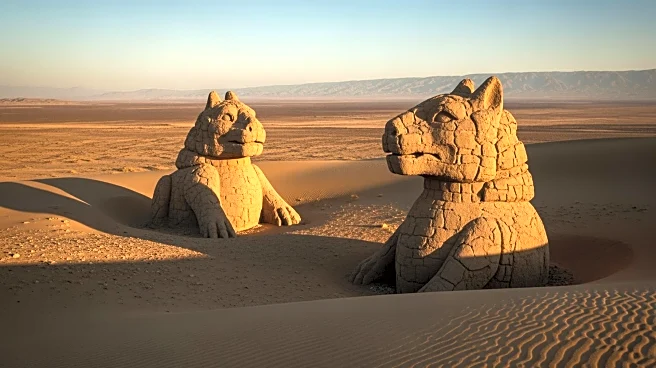
Italian researchers have reported the potential discovery of a second Sphinx beneath the Pyramids of Giza, suggesting the existence of a vast subterranean structure. Radar engineer Filippo Biondi revealed these findings, indicating that satellite images
and ground scans have identified a large mound that could house a second Sphinx. This discovery, if confirmed, could point to a complex network of tunnels and chambers beneath the Giza Plateau. The theory is supported by historical records and previous claims by other researchers, although it remains controversial. Egyptian authorities have yet to grant permission for further exploration to verify these claims.
Why It's Important?
The potential discovery of a second Sphinx and a hidden megastructure beneath the Pyramids of Giza could have profound implications for our understanding of ancient Egyptian civilization. Such a find would not only reshape historical narratives but also boost Egypt's tourism industry by attracting scholars and tourists eager to explore new archaeological wonders. However, the claims are met with skepticism by some experts, including Egypt's former Minister of Antiquities, who argue that previous excavations have not yielded such findings. The ongoing debate highlights the challenges and excitement of archaeological research in one of the world's most historically rich regions.
What's Next?
The next steps involve obtaining permission from Egyptian authorities to conduct more detailed investigations of the site. If granted, these explorations could confirm the existence of the second Sphinx and the associated underground structures. The findings could lead to new archaeological projects and collaborations, potentially involving international teams. The outcome of these investigations will be closely watched by the global archaeological community and could lead to significant advancements in the field.