





What's Happening?
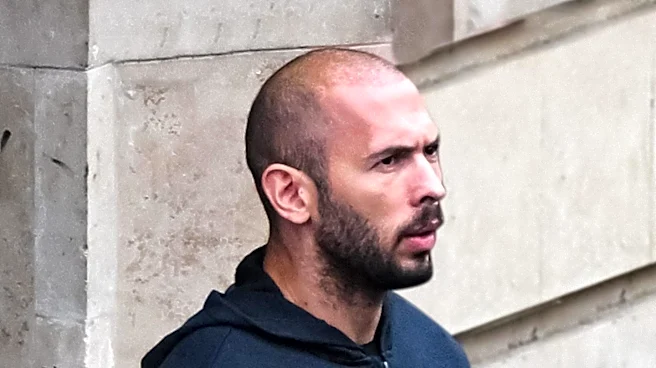
Andrew Tate's lawyer, Joseph McBride, has issued a warning to President Trump regarding potential political repercussions if the administration does not support the influencer in his extradition case to the United Kingdom. Andrew and his brother Tristan
Tate are facing 59 criminal charges in the UK, including allegations of rape and human trafficking. They have been detained in Miami since July. McBride claims that Andrew Tate played a significant role in Trump's 2024 election victory and suggests that failing to support him could alienate young male voters who are part of the 'manosphere,' a group that aligns with Tate's views. Despite these claims, the Trump administration, including Secretary of State Marco Rubio, has publicly distanced itself from the case, stating there is no role for them in the extradition proceedings.
Why It's Important?
The situation highlights the complex interplay between legal proceedings and political strategy. The potential loss of support from a specific voter demographic could impact future elections, particularly for the Republican Party. The 'manosphere' represents a segment of young male voters who may feel disenfranchised if their perceived leaders are not supported by political figures they align with. This case also underscores the challenges faced by political leaders in balancing legal obligations with political alliances and voter expectations. The administration's decision to distance itself from the case may reflect a strategic choice to avoid entanglement in a controversial legal matter, but it risks alienating a vocal segment of the electorate.
What's Next?
The extradition proceedings for the Tate brothers are ongoing, and the outcome could influence future political dynamics. If President Trump decides to intervene, it could signal a shift in strategy to retain support from the 'manosphere.' However, such a move could also draw criticism from those who view the charges against the Tates as serious and deserving of legal scrutiny. The administration's current stance suggests a cautious approach, but political calculations may evolve as the case progresses and as the 2026 elections approach.
Beyond the Headlines
This case raises broader questions about the influence of social media personalities on political landscapes and the extent to which political figures should engage with controversial influencers. The Tates' claims of close ties with the Trump family, whether substantiated or not, illustrate the potential for social media figures to leverage perceived connections for personal and political gain. The situation also highlights the ethical considerations for political leaders in navigating relationships with individuals facing serious legal allegations.