





What's Happening?
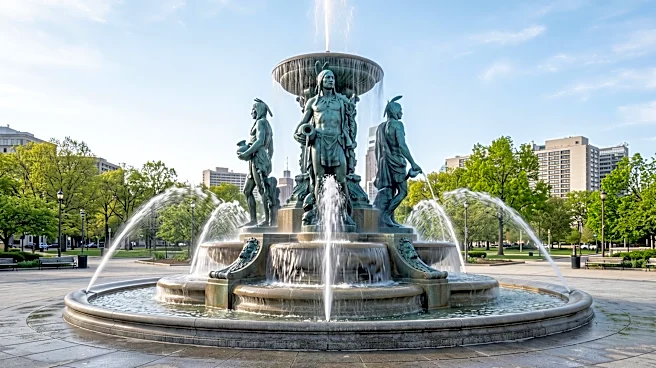
Swann Fountain, a prominent landmark in Philadelphia's Logan Square, has been fully restored and its water features are operational again after extensive damage from vandalism in 2023. The fountain, also known as The Fountain of Three Rivers, was designed
by architect Wilson Eyre Jr. and sculptor Alexander Stirling Calder and dedicated in 1924. It features three bronze Native American figures representing Philadelphia's main waterways and was commissioned to honor Dr. Wilson Cary Swann and the Philadelphia Fountain Society. The vandalism caused hundreds of thousands of dollars in damage to its pumping and mechanical systems, leaving the fountain dry for nearly two years. Philadelphia Parks & Recreation led the major restoration effort, ensuring the fountain continues to be a civic gathering place.
Why It's Important?
The restoration of Swann Fountain is significant for Philadelphia as it returns a beloved public artwork and historical landmark to full function. The fountain is a central feature of the Benjamin Franklin Parkway and a symbol of the city's commitment to public spaces and historical preservation. Its original purpose, to provide clean drinking water and encourage public health, highlights a historical civic effort that resonates with contemporary urban planning. The successful repair after significant vandalism demonstrates the city's dedication to maintaining its cultural heritage and public amenities, which are crucial for community well-being and tourism. The incident also underscores the vulnerability of public art to damage and the substantial resources required for its upkeep and restoration.
What's Next?
With the fountain's central jet and water features now operational, the immediate next step is for the community and visitors to once again enjoy this iconic Philadelphia landmark. Philadelphia Parks & Recreation will likely continue to monitor the fountain's systems to ensure its long-term functionality and prevent future incidents of vandalism. There may be increased discussions or initiatives regarding the protection of public art and historical sites across the city, potentially leading to enhanced security measures or public awareness campaigns. The successful restoration could also serve as a model for future preservation projects in Philadelphia, encouraging investment in the city's historical and cultural assets.
Beyond the Headlines
The restoration of Swann Fountain goes beyond mere repair; it represents the resilience of public spaces and the enduring value of civic art. The fountain's history, from its dedication to public health in the early 20th century to its role as a modern-day gathering place, reflects evolving urban priorities. The act of vandalism and the subsequent community effort to restore it highlight the tension between destructive acts and the collective will to preserve shared heritage. This event could spark broader conversations about the role of public art in fostering community identity, the challenges of maintaining historical infrastructure in urban environments, and the importance of civic engagement in protecting these valuable assets for future generations.