
What's Happening?
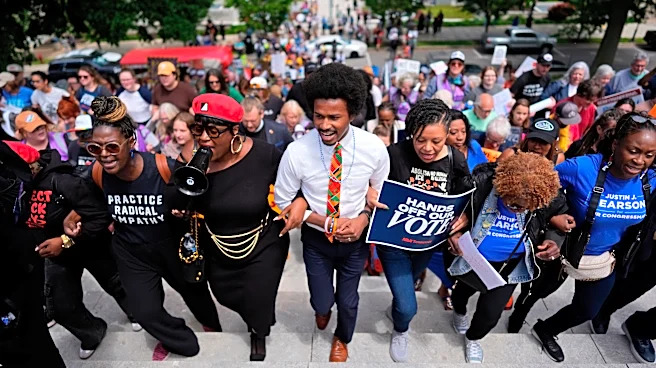
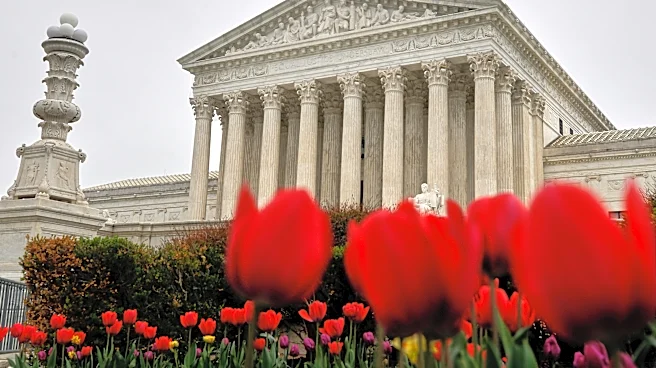
The U.S. Supreme Court's recent ruling in Louisiana v. Callais has sparked discussions about its implications for the Voting Rights Act, particularly Section 2, which addresses racial discrimination in voting.
The ruling affects 'opportunity' legislative districts designed to empower marginalized racial groups, such as African Americans. Historically, these districts were created to counteract racial polarization and ensure minority representation. However, as the U.S. becomes more multiracial, with no single racial group forming a majority by 2050, the effectiveness and relevance of Section 2 are being questioned. The ruling may lead to a reevaluation of how voting rights are protected in a diverse society.
Why It's Important?
The Supreme Court's decision has significant implications for the future of voting rights in the U.S. As the nation transitions to a multiracial society, the traditional mechanisms for ensuring minority representation may need to be rethought. The ruling could influence how electoral districts are drawn and how political power is distributed among racial groups. This development is crucial for maintaining a fair and representative democratic process, as it addresses the balance between protecting minority rights and fostering a unified political landscape. The decision may also impact upcoming elections, shaping the political strategies of parties and candidates.