




What's Happening?
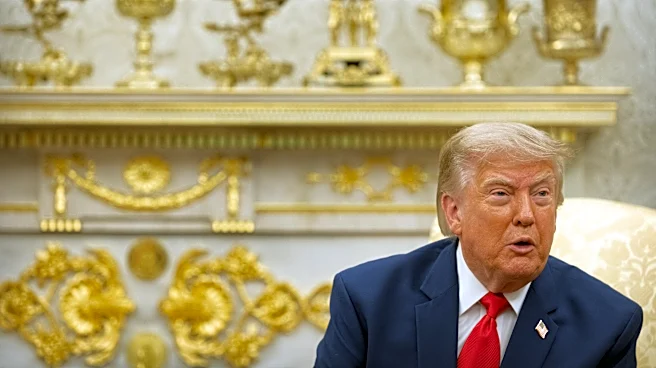
President Trump has publicly endorsed India's election system as a model for the United States, specifically highlighting its use of voter identification and limited reliance on mail-in ballots. In an August 18 Truth Social post, President Trump cited
these aspects of the Indian model to bolster his argument for the SAVE Act, a legislative initiative aimed at implementing stricter voter identification and citizenship verification rules in the U.S. This advocacy comes amidst ongoing debates in the U.S. regarding election security and integrity. The discussion around election practices gained significant traction following the 2020 presidential election, where President Trump repeatedly claimed that expanded mail voting led to fraud, despite courts, state election officials, the Department of Justice, and numerous investigations finding no evidence of widespread fraud capable of altering the outcome. Historically, the U.S. has seen various methods of voter restriction, such as poll taxes and 'grandfather clauses,' which effectively disenfranchised certain populations, particularly poor Black Americans and whites, by requiring fees or ancestral voting eligibility. Intimidation tactics were also prevalent, with Black citizens facing threats, economic retaliation, and violence when attempting to register or vote.
Why It's Important?
President Trump's promotion of the Indian election model and the SAVE Act is significant because it directly influences the national conversation on voting rights and election security in the United States. If adopted, stricter voter ID laws and limitations on mail-in voting could fundamentally alter the accessibility of elections for millions of Americans. Proponents argue that such measures are necessary to prevent fraud and ensure the integrity of the electoral process, thereby increasing public confidence in election results. However, critics contend that these restrictions disproportionately affect minority groups, low-income individuals, and the elderly, who may face greater challenges in obtaining required identification or accessing in-person polling places. The implementation of these policies could lead to a decrease in voter turnout, particularly among demographics that traditionally lean Democratic, potentially shifting electoral outcomes. Furthermore, the debate over election security has become a highly partisan issue, with Republicans increasingly prioritizing these measures, while Democrats often view them as attempts at voter suppression. The outcome of this policy debate will have profound implications for the future of American democracy, influencing who can vote and how easily they can exercise that right, and potentially exacerbating existing political divisions.
What's Next?
The push for the SAVE Act and similar election reforms is expected to continue to be a central theme in U.S. politics, particularly as the next election cycle approaches. Republican lawmakers are likely to introduce and champion legislation at both state and federal levels that incorporates stricter voter ID requirements and limits on mail-in voting, drawing inspiration from models like the one cited by President Trump. These legislative efforts will undoubtedly face strong opposition from Democratic lawmakers and civil rights organizations, who will likely challenge such measures in courts and through public advocacy campaigns. The legal battles over these voting laws are anticipated to be intense and protracted, potentially reaching the Supreme Court, as seen in past election-related disputes like Bush v. Gore. Additionally, public discourse around election integrity will remain highly charged, with both sides mobilizing their bases and attempting to sway public opinion. Advocacy groups will likely increase their efforts to educate voters about new requirements and assist those who may be disenfranchised by stricter laws. The debate will also likely influence campaign strategies, with candidates focusing on voter turnout and election security as key issues.
Beyond the Headlines
The ongoing debate over election security, fueled by President Trump's advocacy for models like India's, touches upon deeper societal and ethical considerations regarding the balance between election integrity and voter accessibility. While ensuring secure elections is a universally accepted goal, the methods employed to achieve it often raise questions about fairness and equal participation. The historical context of voter suppression in the U.S., including poll taxes and literacy tests, highlights the potential for seemingly neutral policies to have discriminatory impacts. The current emphasis on voter ID and mail-voting restrictions, therefore, is not merely a procedural discussion but a reflection of underlying tensions about who constitutes the legitimate electorate and whose voices are prioritized in a democracy. This debate also underscores a growing distrust in democratic institutions, with significant portions of the population questioning the legitimacy of election results. The long-term implications could include further polarization of the electorate, erosion of faith in the democratic process, and a redefinition of what it means to be an eligible voter in the United States. The ethical challenge lies in crafting election laws that are robust against fraud without creating undue burdens that disenfranchise legitimate voters, particularly those from marginalized communities.