





What's Happening?
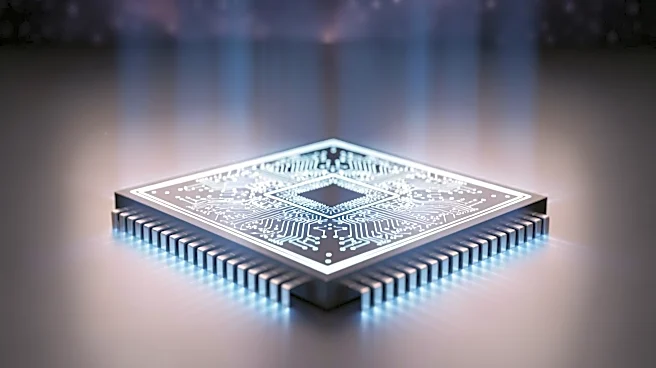
Czech company ADVACAM has provided radiation-sensing chips for NASA's Artemis II mission. These chips, embedded in the Hybrid Electronic Radiation Assessor (HERA), measure cosmic radiation effects on astronauts and spacecraft electronics. The technology,
developed in collaboration with CERN and other institutions, aims to verify the effectiveness of radiation shielding on the Orion spacecraft. The data collected will contribute to safer future spaceflights by improving radiation protection strategies.
Why It's Important?
Radiation exposure is a significant risk for astronauts on deep space missions. The use of advanced radiation-sensing technology on Artemis II represents a critical step in mitigating these risks. The data gathered will inform the design of future spacecraft and missions, enhancing safety for astronauts and reducing the likelihood of space debris from damaged equipment. This development underscores the importance of international collaboration in advancing space technology and safety.
What's Next?
The success of the radiation-sensing technology on Artemis II could lead to its broader adoption in future missions. ADVACAM plans to expand its sensor deployment to various spacecraft, providing real-time radiation forecasts that benefit not only space missions but also high-altitude flights and ground-based systems. Continued innovation in radiation protection will be essential as space exploration ventures further into deep space, including potential missions to Mars.