



What's Happening?
The Department of Homeland Security (DHS) is currently experiencing a shutdown that has lasted for a month, resulting in tens of thousands of employees missing their first full paychecks. The shutdown began on February 14 due to a political impasse over
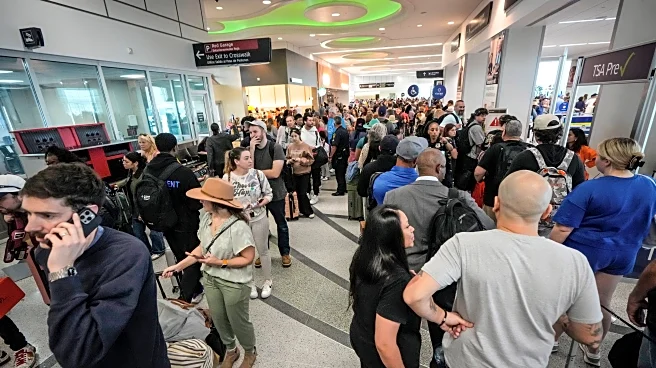
funding, with the majority of DHS employees, about 90% of the 260,000 workforce, continuing to work without pay. These employees, considered 'excepted,' include those from the Transportation Security Administration (TSA), Federal Emergency Management Agency (FEMA), Cybersecurity and Infrastructure Security Agency, Coast Guard, and Secret Service. The financial strain is significant, with many employees struggling to meet their financial obligations. The shutdown is also affecting air travel, causing long security wait times at airports due to reduced TSA staffing levels.
Why It's Important?
The ongoing shutdown of the DHS has significant implications for both the employees and the broader public. For the employees, the lack of pay is causing financial distress, impacting their ability to pay bills and meet daily expenses. This situation highlights the vulnerability of federal workers during funding lapses. For the public, the shutdown is affecting air travel, with longer wait times at airports potentially leading to delays and disruptions. The political stalemate reflects broader issues in U.S. governance, where partisan disagreements can lead to significant operational disruptions in essential services. The situation underscores the need for legislative solutions to prevent such shutdowns from affecting federal employees and public services in the future.
What's Next?
As the shutdown continues, there is no immediate resolution in sight, with both political parties at an impasse over immigration enforcement reforms. Democrats are willing to fund parts of DHS but not Immigration and Customs Enforcement (ICE) or Customs and Border Protection (CBP) without operational changes, while Republicans oppose these demands. The ongoing debate suggests that a resolution may not be forthcoming soon, prolonging the financial strain on employees and operational challenges for the DHS. Legislative proposals, such as the Shutdown Fairness Act, are being discussed to ensure federal employees receive pay during future shutdowns, but these have yet to be enacted.
Beyond the Headlines
The DHS shutdown raises ethical and operational questions about the treatment of federal employees during funding lapses. The decision to continue operations without pay highlights the essential nature of these roles but also the precarious position of workers who are expected to perform duties without timely compensation. The situation may lead to long-term changes in how federal shutdowns are managed, potentially prompting legislative reforms to protect employees and maintain essential services. Additionally, the shutdown reflects broader political dynamics, where partisan conflicts can have tangible impacts on public services and employee welfare.